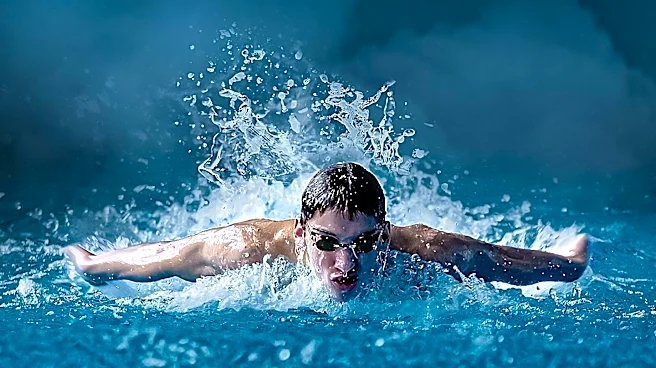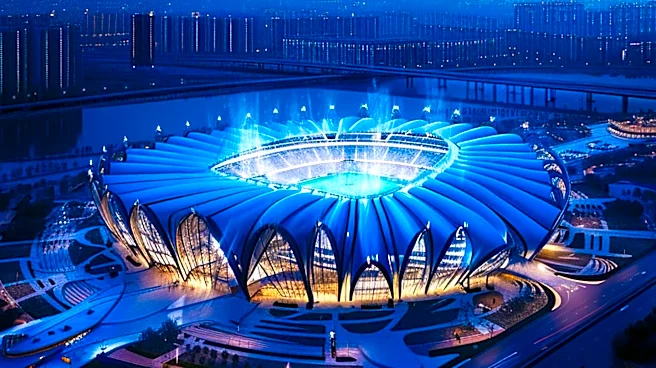






The Beijing National Aquatics Center, also known as the Water Cube, played a pivotal role in the 2008 Summer Olympics, hosting all swimming events, including the Men's 400 meter individual medley. This state-of-the-art facility was designed to enhance the performance of athletes and provide a memorable experience for spectators.
Architectural and Technological Features
The Water Cube was constructed with the goal of increasing the speed of swimmers, incorporating several technological advancements.
The main pool was built to a depth of about 10 feet, which is 3 feet deeper than typical Olympic pools. This depth was intended to reduce turbulence and allow swimmers to glide more efficiently through the water.
Additionally, the pool featured lane lines known as "wave eaters," designed to buffer the waves created by swimmers' strokes. These innovations, combined with the controlled environment of an indoor venue, including temperature, humidity, and lighting, contributed to optimal conditions for competitive swimming. The wide decks surrounding the pool were also designed to give swimmers a sense of space, enhancing their focus and performance.
The Role of the Venue in the Olympics
The Beijing National Aquatics Center was not only a marvel of engineering but also a central hub for Olympic swimming events. It hosted a range of competitions, from individual medleys to relay races, attracting athletes from around the world. The venue's design and facilities were instrumental in facilitating record-breaking performances, including Michael Phelps' world record in the Men's 400 meter individual medley.
The Water Cube's significance extended beyond its physical attributes; it symbolized China's commitment to hosting a successful and memorable Olympic Games. The venue was a focal point for spectators and media, showcasing the excitement and drama of Olympic swimming.
Legacy and Impact
The Beijing National Aquatics Center left a lasting legacy on the world of competitive swimming. Its innovative design set a new standard for Olympic venues, influencing the construction of future aquatic centers. The success of the 2008 Olympics, highlighted by the performances at the Water Cube, demonstrated the importance of venue design in enhancing athletic achievement.
Today, the Water Cube continues to serve as a symbol of excellence in sports architecture, hosting various events and activities. Its impact on the 2008 Olympics remains a testament to the power of thoughtful design and engineering in creating an environment where athletes can thrive.