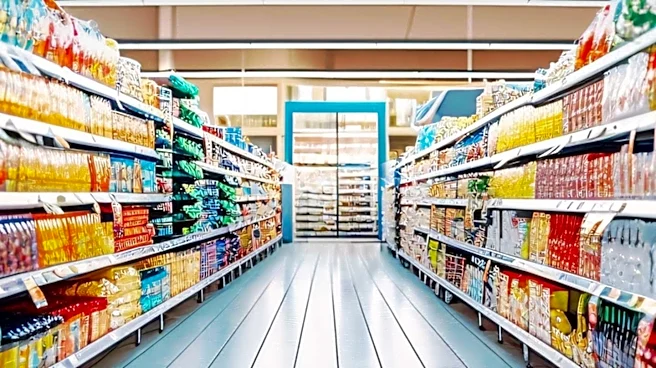






While most grocery stores operate as private enterprises driven by profit, a distinct category exists: public grocery stores. These establishments are operated for the benefit of the general public, often by local or national governments, rather than solely for financial gain. Their existence highlights a governmental role in ensuring food access, promoting price competitiveness, or implementing specific economic policies. Public grocery stores can
be found in diverse economic systems, from communist states to mixed-market economies, serving various community needs.
Purpose and Operation of Public Grocery Stores
Public grocery stores are typically established with several key objectives. One primary goal is to increase price competitiveness in areas where access to food might be limited or where private retailers face little competition. By operating these stores, governments can influence market prices and ensure that essential food items remain affordable for residents. Another purpose is to sell groceries at prices below the market rate, often through subsidization, particularly targeting low-income neighborhoods or vulnerable populations. This can be a crucial measure to combat food insecurity and improve public welfare.
In some cases, public grocery stores may arise as a result of policy decisions aimed at restricting private enterprise or promoting state control over essential services. While the term "public grocery store" most commonly refers to government-run establishments, it can also sometimes encompass cooperatives, non-profits, and public-private partnerships that operate with a similar public benefit orientation. These varied models demonstrate a flexible approach to addressing community food needs outside of purely commercial ventures.
Types and Global Presence
Government-owned grocery stores can take several forms, including nationalized entities, tribally owned stores, municipality-owned stores, or those owned by other sub-national jurisdictions. Historically, state-owned grocery stores have been prevalent in current and former communist and socialist states, where central planning often dictated the distribution of goods. However, their presence is not exclusive to these systems; they are also found in states with predominantly capitalist or mixed-market economies, indicating a broader recognition of their potential utility.
Examples of government-run food retail extend to specific institutional settings. Commissaries, for instance, are grocery stores operated by militaries or prisons to provide goods to enlistees and prisoners. These serve a captive population and ensure access to necessities within a controlled environment. Public grocery stores share similarities with other government-run retail operations, such as state-owned alcohol stores, which also operate under public control for specific policy reasons, whether it be revenue generation, public health, or market regulation. The existence of public grocery stores alongside privately owned ones in a mixed-market economy has been referred to by some advocates as a "public option" for grocery shopping, suggesting a choice for consumers and a mechanism for market intervention when necessary.