



Dwight Eugene Gooden, known by his nicknames "Dr. K" and "Doc," emerged as a prominent figure in Major League Baseball (MLB) in the mid-1980s. Born on November 16, 1964, in Tampa, Florida, Gooden's journey to professional baseball began in his hometown. His early career was marked by exceptional talent and rapid advancement through the minor leagues, quickly establishing him as a pitcher with immense potential. This period laid the groundwork for
what would become a storied, though at times tumultuous, career in the major leagues.
From Hillsborough High to Minor League Dominance
Gooden attended Hillsborough High School in Tampa, where he was a teammate on the baseball team with Vance Lovelace. His talent was recognized early, leading to him being drafted in the first round of the 1982 MLB draft, making him the fifth player selected overall. Following his draft, Gooden spent two seasons honing his skills in the minor leagues. In 1982, he split his time between Kingsport and Little Falls, achieving a combined 5-5 win-loss record.
His 1983 season was particularly impressive, as he led the Class-A Carolina League in wins, strikeouts, and earned run average (ERA) while playing for the Lynchburg Mets. During this season, Gooden recorded an astonishing 300 strikeouts in just 191 innings pitched. This dominant performance caught the attention of Triple-A Tidewater Tides manager Davey Johnson, who would later manage the Mets. Johnson was so convinced by Gooden's abilities that he brought him up for the Tides' postseason, signaling his readiness for higher levels of competition.
The New York Mets Era Begins: 1984-1986
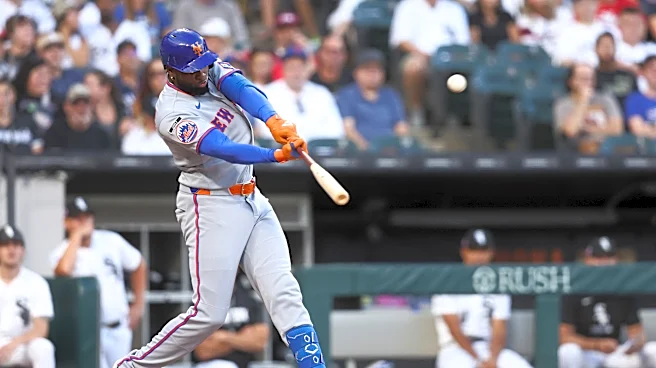
Gooden's major league career with the New York Mets began in 1984, and he quickly made an impact. His first two seasons were characterized by an incredible strikeout rate, averaging 10.05 strikeouts per nine innings pitched. This early success earned him the nickname "Dr. K," a testament to his ability to consistently strike out opposing batters. By the time he reached his 21st birthday, Gooden had already accumulated 928 strikeouts across both minor and major league play, a remarkable feat for such a young pitcher.
In 1986, Gooden compiled a 17-6 record. While still strong, his 200 strikeouts that season placed him fifth in the National League, more than a hundred behind the league leader, Mike Scott of the Houston Astros. This marked a significant decrease from his first two seasons. Gooden himself noted a change, stating that the "impossible-to-track, impossible-to-time movement" of his fastball deserted him in 1986 and never returned. Despite this, he achieved another All-Star record in 1986, becoming the youngest pitcher to start an All-Star Game at 21 years and 241 days old.
Postseason Challenges and Early Red Flags
As the Mets' ace, Gooden entered the 1986 postseason with high expectations. His postseason started promisingly, despite a 1-0 loss to Mike Scott in the NLCS opener. He then pitched 10 innings of one-run ball in Game 5, resulting in a no-decision. However, his performance in the World Series against the Boston Red Sox was notably worse, as he failed to get past the fifth inning in either of his two starts. Despite his struggles, the Mets ultimately won the championship, securing four of the five games not started by Gooden.
An early indication of future challenges emerged when Gooden failed to attend the team's victory parade. Years later, in 2011, he revealed that he had been using drugs at his dealer's apartment during the 1986 parade. This admission highlighted a personal struggle that would eventually cast a shadow over parts of his career, even as his on-field talent continued to be recognized.
Continued Performance and Injury Setbacks
In 1988, Gooden posted an 18-9 record, helping the Mets return to the postseason. He faced Orel Hershiser in the first game of the NLCS against the Los Angeles Dodgers, pitching well with only four hits allowed and 10 strikeouts, but left trailing 2-0 after seven innings. In Game 4, Gooden entered the ninth inning with a 4-2 lead, poised to give the Mets a commanding 3-1 series advantage. However, he allowed a game-tying home run to Mike Scioscia, and the Dodgers went on to win that game in 12 innings and ultimately the series 4-3.
Gooden's career faced further challenges with a shoulder injury in 1989, limiting him to just 17 starts, though he still managed a 9-4 record. He rebounded in 1990 with a 19-7 season and 223 strikeouts, tied for second behind teammate David Cone. However, another injury in 1991 marked a significant decline in his career. While drug abuse is often cited for his pitching troubles, some analysts point to his heavy early workload, estimating he threw over 10,800 pitches between 1983 and 1985, a period when he was only 18 to 20 years old. His historic 1985 season alone saw him hurl 276 and two-thirds innings, a workload rarely seen in modern baseball, with only two pitchers since 1987 reaching that mark by the end of the 2024 season: knuckleballer Charlie Hough and Roger Clemens.