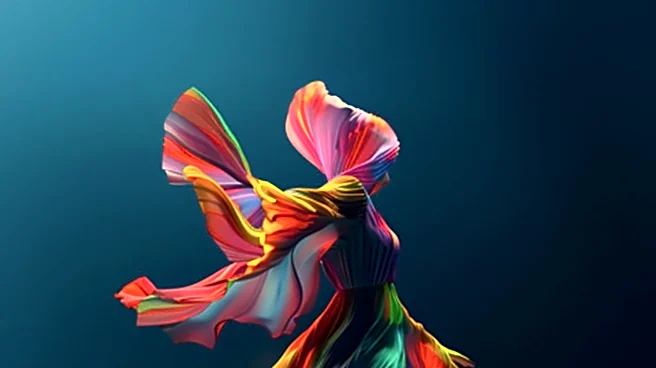









Personification is a fundamental concept in art and literature, defined as the representation of any thing, being, or abstraction as a person or with person-like qualities. This device allows for complex ideas and inanimate objects to be understood through the relatable lens of human experience. It is a common tool used across various forms of creative expression, from ancient myths to modern storytelling, helping audiences connect with concepts that
might otherwise seem abstract or distant.
Common Subjects of Personification
In the arts and as a literary device, personification is frequently applied to a wide range of subjects. Places are often personified, particularly cities, countries, and continents, giving them a distinct identity and character. Elements of the natural world also commonly receive person-like qualities; this includes trees, the changing seasons, the traditional "four elements" (earth, air, fire, water), the four cardinal winds, and even the five senses. These personifications help to imbue the natural world with a sense of agency and presence.
Abstract concepts are another significant area for personification. Ideas such as death, the four cardinal virtues, the seven deadly sins, and creative expression itself are often depicted as persons. For instance, the nine Muses in classical mythology are personifications of various forms of creative expression, inspiring artists and thinkers. This practice makes abstract ideas more tangible and easier to grasp, allowing for deeper exploration of their meaning and impact.
Personification and Allegory
Personifications are very common elements within allegory, which is a story, poem, or picture that can be interpreted to reveal a hidden meaning, typically a moral or political one. However, historians and theorists of personification often note that the two concepts have been too frequently confused, or that discussions about personification have been dominated by allegory. This confusion can lead to single images of personifications being incorrectly titled as an "allegory," even when they are simply a direct representation of a concept as a person.
Despite this frequent confusion, the distinction is important for understanding the specific role each plays in artistic and literary works. While allegory uses personified figures to convey a broader message, personification itself is the act of giving human attributes to non-human entities. The relationship is close, but not identical, and recognizing this helps in a more precise analysis of artistic and literary techniques.
Historical Continuity and Modern Manifestations
The iconography of several personifications has shown remarkable continuity, persisting from late antiquity all the way through the 18th century. This enduring presence highlights the timeless appeal and effectiveness of personification as a communicative tool. Interestingly, female personifications have historically outnumbered male ones, though this trend has shifted with modern national personifications, many of which are male figures.
By the late 20th century, personification seemed to have fallen largely out of fashion in some artistic circles. However, the 21st century has seen a resurgence of semi-personificatory figures, particularly in popular culture. The superhero figures prevalent in many comic book series, for example, have come to dominate popular cinema through numerous superhero film franchises. These characters, while not always direct personifications of abstract concepts, often embody specific ideals or powers in a human-like form, demonstrating a continued fascination with giving human qualities to extraordinary entities.