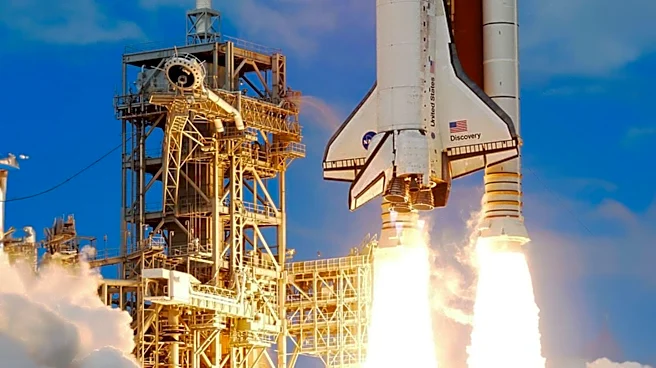



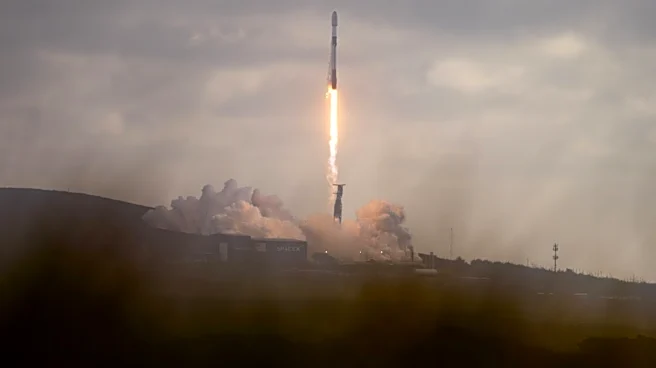
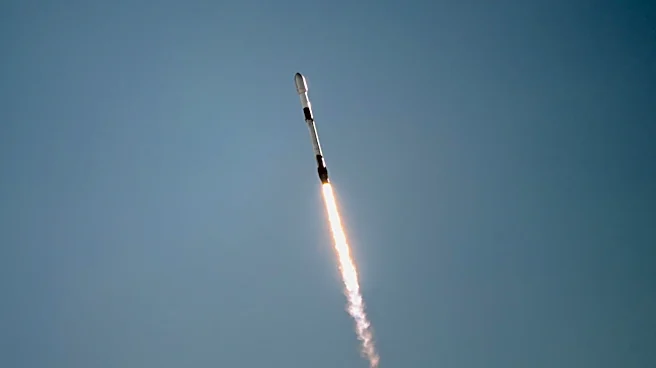

STS-95 was a Space Shuttle mission launched from Kennedy Space Center, Florida, on October 29, 1998, utilizing the orbiter Discovery. This mission marked the 25th flight for Discovery and the 92nd mission in the Space Shuttle program, which began in April 1981. It garnered significant public attention due to the return to space of former Project Mercury astronaut and U.S. Senator John H. Glenn Jr. At 77 years old, Glenn became the oldest person to travel
into space, a record he held for 23 years for orbital flight. The mission also achieved another first with Pedro Duque becoming the first Spaniard in space.
The primary objectives of STS-95 were diverse, encompassing life-sciences experiments, astronomical observations, and technology validation. The mission aimed to further understanding of the human body, particularly through experiments conducted on Senator Glenn within the Spacehab module. Beyond human physiology, STS-95 sought to enhance astronomical knowledge, focusing on the Sun and its influence on Earth. The mission lasted just under ten days, concluding with Discovery's landing at the Kennedy Space Center's Shuttle Landing Facility.
Pioneering Payloads and Scientific Endeavors
The STS-95 mission carried a suite of advanced payloads designed to conduct a wide array of scientific investigations. Among these was the Spacehab module, a private company's contribution that provided additional pressurized workspace for experiments, cargo, and crew activities. This module was crucial for the life sciences experiments, including those involving Senator Glenn, and supported various studies sponsored by NASA, the Japanese Space Agency (NASDA), and the European Space Agency (ESA), focusing on life sciences, microgravity sciences, and advanced technology.
Another significant payload was the Spartan 201-5 free-flyer, deployed and retrieved using the Shuttle's mechanical arm. This spacecraft was specifically designed to investigate the physical conditions and processes within the hot outer layers of the Sun's atmosphere, known as the solar corona. While deployed, Spartan gathered measurements of the solar corona and solar wind. NASA anticipated that the data collected would lead to a much better understanding of solar winds, which directly impact orbiting satellites and Earth's weather conditions, consequently affecting television and phone communications. This was the fifth flight for the Spartan payload, which had previously flown on STS-56 in April 1993 and STS-87 in November 1997, where it experienced attitude control system issues that were resolved for its STS-95 re-flight.
Advancing Hubble and Extreme Ultraviolet Research
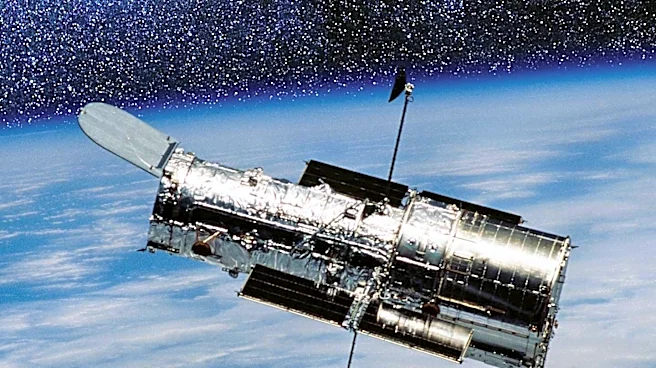
STS-95 also played a critical role in preparing for future space endeavors, particularly concerning the Hubble Space Telescope. The Hubble Space Telescope Orbital Systems Test (HOST) platform carried experiments to validate components intended for installation during the third Hubble Space Telescope servicing mission. It also evaluated new technologies in an Earth-orbiting environment. Four experiments were conducted on the HOST platform, including the NICMOS Cooling System, which allowed for zero-gravity verification of a reverse turbo Brayton cycle cryocooler, promising longer operational life than the dewar system then in use on Hubble.
Additionally, the HOST platform tested the HST 486 computer to identify any radiation-susceptible parts in the DF-224 replacement computer planned for the third servicing mission, and to demonstrate hardware and software responses to Single Event Upsets (SEUs). A solid-state recorder experiment compared the on-orbit operation of a flight-spare unit with the one installed in Hubble. A fiber optic line test also utilized a 4 kbit/s data stream routed to a laptop for post-flight comparison. Complementing these efforts was the International Extreme Ultraviolet Hitchhiker (IEH) payload, which consisted of half a dozen different experiments mounted on a support structure in Discovery's payload bay. These experiments, such as the Solar Extreme Ultraviolet Hitchhiker (SEH) and the Ultraviolet Spectrograph Telescope for Astronomical Research (UVSTAR), aimed to obtain EUV and FUV fluxes crucial for studying Earth's upper atmosphere and measuring EUV fluxes to form images of extended plasma sources like Jupiter and hot stars.