




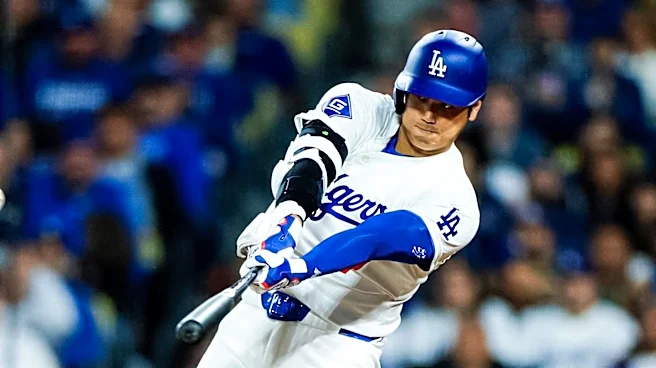

On December 11, 2023, Shohei Ohtani made headlines across the globe by signing a monumental 10-year, $700 million contract with the Los Angeles Dodgers. This agreement instantly became the largest contract in the history of professional sports, setting a new benchmark for athlete compensation. Beyond its sheer size, the contract featured an innovative and highly discussed deferred payment structure, designed to provide financial flexibility for the Dodgers while
still securing Ohtani's long-term commitment. This deal not only underscored Ohtani's immense value as a generational talent but also highlighted strategic financial planning in high-stakes professional sports negotiations.
The Record-Breaking Sum
The $700 million figure of Ohtani's contract immediately captured attention as an unprecedented sum in professional sports. This 10-year agreement surpassed all previous records, signaling the extraordinary market value placed on Ohtani, who is celebrated for his unique two-way abilities as both an elite pitcher and a powerful hitter. The magnitude of this contract reflects not only his on-field performance but also his global appeal and marketability, particularly in the lucrative Los Angeles market.
At the time of its signing, no other athlete in any professional sport had secured a deal of this financial scale. This contract positioned Ohtani as one of the highest-paid athletes in the world, a testament to his singular status in baseball. The Dodgers' willingness to commit such a substantial amount of money over a decade demonstrated their belief in Ohtani's ability to deliver championships and generate significant revenue for the franchise, both through his play and his immense popularity.
Innovative Deferred Payment Structure
Perhaps the most distinctive aspect of Ohtani's contract was its highly unusual deferred payment structure. The agreement stipulated that $68 million per season of his wages would be deferred until after the deal's conclusion, to be paid out from 2034 to 2043. This meant that Ohtani would only receive $2 million per season from 2024 to 2033, a significantly lower annual salary than his total contract value would suggest.
This deferred payment arrangement was a strategic move with several implications. For the Los Angeles Dodgers, it provided substantial financial flexibility in the short term, allowing them to allocate more resources to other players and maintain a competitive roster around Ohtani. By reducing the immediate impact on their payroll and luxury tax calculations, the Dodgers could pursue other top-tier talent, enhancing their chances of winning championships during Ohtani's playing years. For Ohtani, while it meant a lower immediate income, it also offered potential tax benefits and a guaranteed income stream well into his post-playing career, demonstrating a long-term financial strategy.
Impact and Legacy of the Deal
The signing of Ohtani's contract had an immediate and profound impact on the baseball world. It set a new standard for player contracts and sparked discussions about innovative financial structures in sports. The deal solidified Ohtani's position as one of the most influential figures in baseball, not just for his on-field prowess but also for his role in shaping the economic landscape of the sport.
The contract's structure, while unique, also highlighted the creative ways teams and players can negotiate to achieve mutual benefits. It demonstrated a willingness from both sides to think outside traditional contract models to achieve strategic goals. As Ohtani went on to win a World Series, achieve the 50-50 club, and earn a unanimous NL MVP in 2024, the contract quickly began to look like a worthwhile investment for the Dodgers, proving its value beyond just the financial figures.