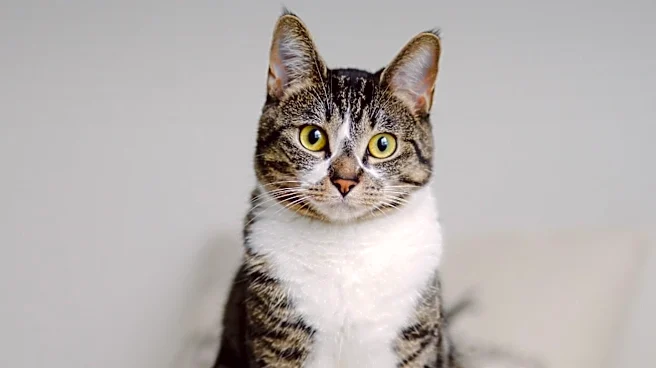


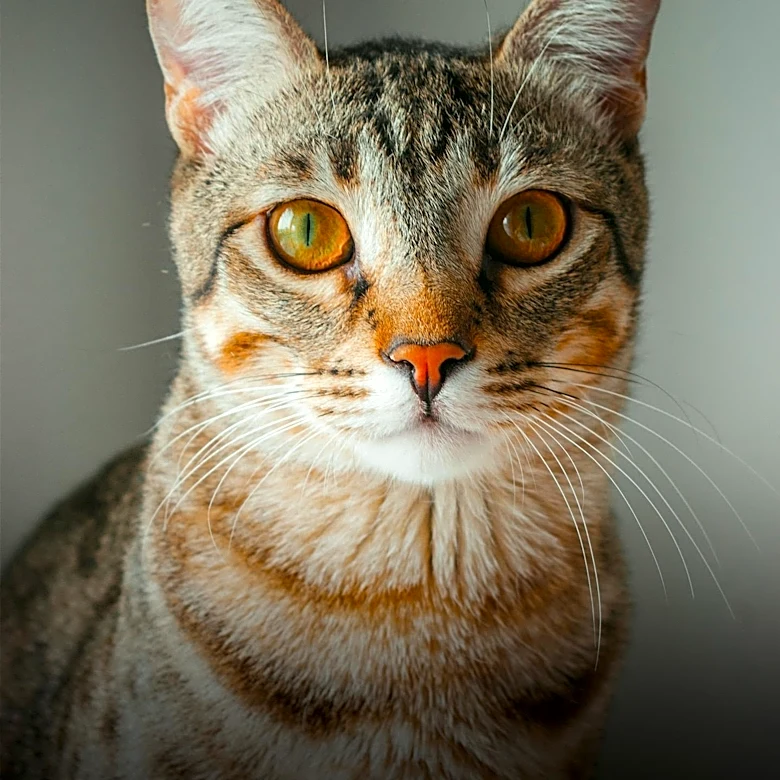




The European Shorthair, also known as the European or Celtic Shorthair, stands as a pedigreed breed of domestic cat with a fascinating history rooted in Europe. This breed is particularly notable for its resemblance to the typical domestic cats found across the continent, a characteristic that has both defined and complicated its recognition. Originating in Sweden, the European Shorthair was officially recognized by the Fédération internationale féline
(FIFe) in 1949, marking a significant step in establishing its unique identity within the world of pedigreed cats.
Distinguishing the European Shorthair
For a period, the name "European Shorthair" was mistakenly applied to the non-pedigreed landrace domestic cat of Europe, leading to considerable confusion. This issue was compounded by the fact that the pedigreed European Shorthair is specifically bred to resemble these common European domestic cats. The standard for the European Shorthair emphasizes that it should not resemble any other specific breed, instead maintaining the robust and agile nature characteristic of European household cats. Its physical traits are balanced, featuring a medium size and a morphology free from exaggerated characteristics, with traditional coat colors.
Before the European Shorthair gained its distinct recognition, the role of the cat breed most closely resembling the original domestic cats of Europe was held by the British Shorthair. This was the case until the early 20th century, despite the British Shorthair being stockier than most common European cats. The British Shorthair had been crossed with Persian cats and selectively bred to develop a more cobby build, a slightly shortened muzzle, and a thicker coat. This divergence in appearance eventually necessitated a clearer distinction between the two types.
The Path to Independent Recognition
Scandinavian breeders faced particular confusion because the British Shorthair was also referred to as the European Shorthair during that era, even though their appearances differed. Felinological associations initially recognized both types of cats under a single breed, meaning they were judged by the same standards at cat shows. This situation persisted until 1982, when FIFe finally registered the Scandinavian type of European Shorthair as a separate breed, complete with its own distinct standard. This decision was crucial for clarifying the breed's identity and allowing it to be judged on its own merits.
Popularity and Challenges
Today, the European Shorthair enjoys popularity in Scandinavian countries, where its natural breed character, untainted by crossbreeding with other breeds, is highly valued. The oldest known European Shorthair registered with FIFe was born in 1940, highlighting the breed's long-standing presence. However, in other parts of Europe, the European Shorthair remains a rare breed and is frequently mistaken for a common alley cat. In the United States and the United Kingdom, the breed faces significant competition from the British Shorthair and the American Shorthair, and it has not yet been recognized by any federations in these countries. This lack of recognition outside of Europe contributes to its relative obscurity in those regions, despite its established pedigree and unique characteristics.