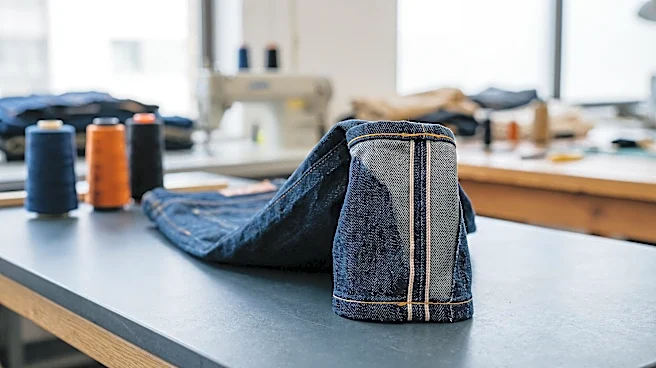





Overlock stitching, often referred to as "merrowing" or "serging," is a specialized type of stitch crucial in modern textile production. Unlike standard lockstitching, which uses a bobbin, overlock sewing machines employ loopers fed by multiple thread cones to create intricate thread loops. These loops are essential for sewing over the edge of one or two pieces of cloth, serving purposes such as edging, hemming, or seaming. The versatility of overlock stitches
makes them indispensable for a wide array of applications, from reinforcing seams to creating decorative finishes.
At its core, an overlock stitch is formed through a precise sequence of movements involving the needle and loopers. The process begins when the needle enters the fabric, forming a loop in the thread at the back of the needle. As the needle continues its downward motion, the lower looper moves from left to right, passing behind the needle and through the newly formed thread loop. This action carries the lower thread through the needle thread. Subsequently, the upper looper advances from right to left, passing behind the lower looper to pick up both the lower looper thread and the needle thread. The lower looper then returns to its far-left position, while the upper looper holds the threads in place. Finally, the needle descends again, passing behind the upper looper to secure the upper looper thread, completing one overlock stitch cycle.
Overlock stitches are classified primarily by the number of threads used, with industrial machines typically employing 1, 2, 3, 4, or 5 thread formations, each offering unique benefits. One-thread formations are used for end-to-end seaming, also known as "butt-seaming." Two- and three-thread formations, often called "merrowing," are the most common for edging and seaming, particularly on knits and wovens. Four-thread formations create "mock safety stitches," providing extra strength while maintaining flexibility. For the strongest seams, especially in apparel manufacturing, five-thread formations utilize two needles to create "safety stitches."
Beyond the number of threads, several variables contribute to the diversity of overlock stitches. The "stitch eccentric" dictates the number of stitches per inch, which is adjustable and influences the density and appearance of the edge. A higher stitch eccentric creates a denser, more solid-looking edge. The "stitch width" refers to how wide the stitch extends from the fabric's edge; lightweight fabrics often require a wider stitch to prevent pulling. An additional feature, "differential feed," allows for adjustment of the fabric feed, enabling effects like ruffling or a "lettuce-leaf" edge. Some specialized machines can even roll the fabric edge into the stitch for enhanced durability.
Overlock sewing machines are designed for high-speed operation, typically running from 1000 to 9000 revolutions per minute (rpm). Most are utilized in industrial settings for efficiently edging, hemming, and seaming a wide variety of fabrics and products. While many overlock machines, often called "sergers" in North America, include automated cutters to trim fabric edges as they sew, some models are made without this feature. The inclusion of cutters allows for the quick and easy creation of finished seams, making overlock machines a cornerstone of efficient textile manufacturing.