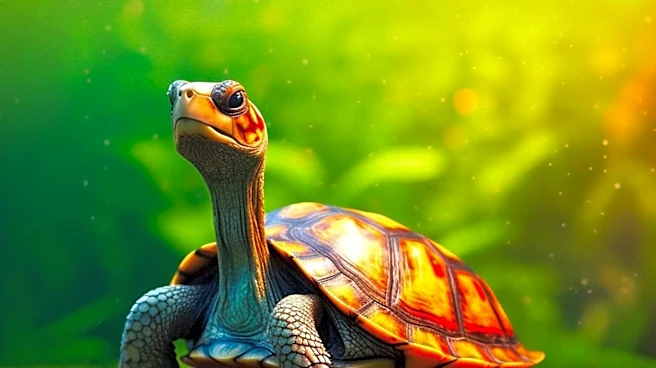







The red-eared slider, a popular semi-aquatic turtle, exhibits a fascinating and intricate life cycle, particularly concerning its reproductive behaviors and early development. From elaborate underwater courtship rituals to the delicate process of egg-laying and the vulnerable first days of a hatchling, each stage is crucial for the continuation of the species. Understanding these processes provides insight into the biology of these resilient reptiles,
which are almost entirely aquatic but rely on land for reproduction.
Courtship and Mating Rituals
Courtship and mating activities for red-eared sliders typically occur underwater, spanning from March to July. The male initiates courtship with a distinctive display: he swims around the female, fluttering or vibrating the back side of his long claws on and around her face and head. This behavior is thought to potentially direct pheromones towards the female, signaling his readiness to mate. If the female is receptive to his advances, she will swim towards him and then sink to the bottom, indicating her willingness to mate. However, if she is not receptive, she may become aggressive towards the male, rejecting his overtures. While courtship can be a lengthy affair, sometimes lasting up to 45 minutes, the actual mating process is relatively brief, typically concluding within 10 minutes.
Interestingly, male sliders may occasionally display courtship behavior towards other males, and in captivity, they might even direct this behavior towards other household pets. Among male terrapins, this could be a sign of dominance, potentially preceding a fight. Young terrapins, even before reaching sexual maturity at around five years of age, may mimic the courtship dance, though they are incapable of mating at this stage.
Egg-Laying and Incubation
Following successful mating, the female red-eared slider dedicates extra time to basking, a critical behavior that helps keep her developing eggs warm. Her diet may also change during this period; she might eat only specific foods or consume less than usual. A female can lay anywhere from two to 30 eggs in a single clutch, with the exact number depending on her body size and other environmental factors. Remarkably, one female can produce up to five clutches within the same year, with clutches typically spaced 12 to 36 days apart. The time between mating and egg-laying can vary from days to weeks, and fertilization can occur in conjunction with laying, or sperm can remain viable within the female's body to fertilize eggs in subsequent seasons without further mating. During the final weeks of gestation, the female spends less time in the water, instead smelling and scratching at the ground, searching for an ideal location to excavate a nest with her hind legs and deposit her eggs.
Incubation of the eggs is a lengthy process, lasting between 59 and 112 days. Late-season hatchlings may even spend the entire winter within the nest, emerging only when warmer weather arrives in the spring. A unique aspect of red-eared slider development is temperature-dependent sex determination. Eggs incubated at temperatures between 22–27 °C (72–81 °F) will produce only males, while warmer temperatures lead to the development of females. Colder temperatures, however, can result in the death of the embryos.
The Vulnerable Hatchling Stage
Just before hatching, the egg contains a terrapin and an egg sac, each making up about 50% of the egg's contents. A new hatchling uses a specialized egg tooth to break open its shell; this tooth falls out approximately an hour after hatching and never regrows. Hatchlings may remain inside their eggshells for a day or two after breaking free, and if forced out prematurely, they will attempt to return. Upon leaving the shell, a hatchling still has a small yolk sac protruding from its plastron. This yolk sac is vital, providing nourishment, and must be absorbed into the terrapin's belly over several days. The sac does not simply fall off; it must be fully absorbed, and the opening must heal on its own before the terrapin can safely enter the water. The period between hatching and water entry is typically 21 days.
During this critical stage, damage to or excessive movement of the protruding yolk sac can be fatal, as it may allow air into the terrapin's body. This is why marking the top of terrapin eggs is crucial if they need to be relocated; turning an egg upside down can smother the embryo or cause the hatchling to try to flip with the yolk sac, leading to death. Another fatal danger is water entering the body cavity before the sac is completely absorbed and the opening has fully healed.