





On July 27, 2007, a tragic event unfolded in the skies over Phoenix, Arizona, marking a dark day in the history of aviation. Two news helicopters, both covering a police chase, collided mid-air, resulting in the loss of all four individuals on board. This incident not only shocked the local community but also led to significant changes in how news helicopters operate in the area.
The Collision
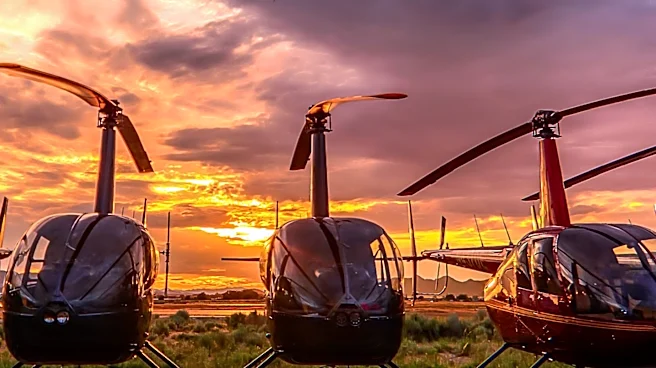
The collision involved two AS-350 AStar helicopters from television stations
KNXV-TV and KTVK. Both helicopters were covering a police pursuit when they collided over Steele Indian School Park in central Phoenix. On board the KNXV helicopter were pilot Craig Smith and photographer Rick Krolak, while the KTVK helicopter carried pilot Scott Bowerbank and photographer Jim Cox. Tragically, there were no survivors from either helicopter, but fortunately, no casualties were reported on the ground.
The collision was a first of its kind, as it was the first known incident of two news helicopters colliding in mid-air. It also became the worst civil aviation incident in Phoenix's history. The crash was immediately reported by three other news helicopters from KSAZ, KPNX, and KPHO, which were in the vicinity at the time.
Investigation and Findings
The National Transportation Safety Board (NTSB) conducted a thorough investigation into the collision. The NTSB concluded that the probable cause of the accident was the failure of both pilots to see and avoid each other. This failure was attributed to the pilots' responsibilities to perform reporting and visual tracking duties for their stations' electronic news gathering operations. Additionally, the investigation highlighted the lack of formal procedures for Phoenix-area news helicopter pilots to follow during such operations.
On the day of the accident, Phoenix Police Chief Jack Harris suggested that the suspect in the police chase could potentially be held responsible for the deaths. However, when the suspect pleaded guilty to 35 crimes related to the chase in 2010, he was not charged with the deaths of the helicopter occupants.
Changes and Legacy
In the aftermath of the collision, significant changes were made to news helicopter operations in Phoenix. The incident led to the establishment of shared news helicopters among the local television stations. Initially, KTVK shared a helicopter with KPHO-TV and KPNX, but eventually, all four Phoenix news operations began sharing a single helicopter.
The collision also served as a wake-up call for the industry, highlighting the need for better coordination and communication among news helicopter pilots. The tragic event underscored the importance of safety protocols and the need for formal procedures to prevent similar incidents in the future. The legacy of the 2007 Phoenix news helicopter collision continues to influence aviation safety practices today.