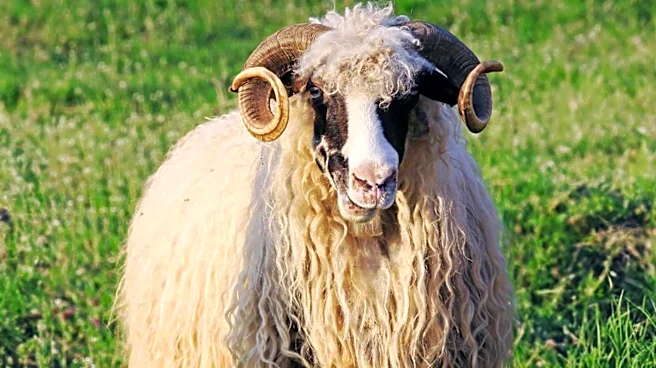







The Navajo-Churro, often simply called Churro, is a distinctive breed of domestic sheep with a rich history intertwined with the Diné people. Originating from the Spanish Churra sheep brought to North America during the Spanish Conquest around the 16th century, this breed has adapted to harsh environments and become an integral part of Diné subsistence and culture. Its unique characteristics, including a double coat and, in some rams, four horns,
set it apart from many other sheep breeds.
Historical Journey and Adaptation
The Spanish Churra sheep, renamed Churro by American frontiersmen, first arrived in North America in 1598 with Juan de Oñate. Initially, these sheep were used to provide food for Spanish armies and settlers. By the 17th century, Churros had gained popularity among Spanish settlers in the upper Rio Grande Valley. The Diné people acquired Churro flocks through trading, and the breed quickly became a vital component of their economy and cultural practices. The Navajo specifically bred these sheep to thrive in a pastoral lifestyle within a challenging desert environment, showcasing their resilience and adaptability.
The common Diné word for the breed, Dibé dits’ozí, translates to