


The 1948 World Series marked a significant moment in baseball history, not only for the Cleveland Indians, who secured their second championship, but also for the burgeoning medium of television. This championship series pitted the American League champion Cleveland Indians against the National League champion Boston Braves. It was a contest that ended with the Indians claiming victory in six games, their first title since 1920 and, as of 2026, their most
recent. Beyond the diamond, the series played a crucial role in expanding the reach of televised baseball, moving beyond the limited regional broadcasts of previous years.
Cleveland's Path to Victory and a Historic Drought
The Cleveland Indians' triumph in the 1948 World Series was hard-fought. They had to win a one-game playoff against the Boston Red Sox to secure the American League pennant, spoiling what could have been an all-Boston World Series. Despite superstar pitcher Bob Feller failing to win either of his two starts in the series, the Indians managed to defeat the Boston Braves. This victory represented their second championship in franchise history, with their first coming in 1920 against the Brooklyn Dodgers. As of 2026, this remains Cleveland's last World Series victory, marking the longest championship drought in Major League Baseball.
The series itself was notable for several unique aspects. It was the first World Series where both participating teams had previously played in, but not yet lost, a World Series. The Braves' only prior appearance was a 1914 win against the Philadelphia Athletics. The 1948 series was also the only World Series played between 1947 and 1958 not to feature a New York team, and the last not won by a New York team until the 1957 Series. Interestingly, this was the first World Series, and the last until 2016, in which both teams scored the same number of total runs. It also marked the final World Series to feature a team managed by a player-manager.
The Dawn of Expanded Television Coverage
The 1948 World Series was a landmark event for television broadcasting. While the previous year saw limited coverage in a New York-Schenectady-Philadelphia-Baltimore-Washington network, the 1948 series significantly expanded its reach. Famed sportscasters Red Barber, Tom Hussey (in Boston), and Van Patrick (in Cleveland) announced the games, bringing the action to a wider audience than ever before. This expansion was crucial for the growth of televised sports.
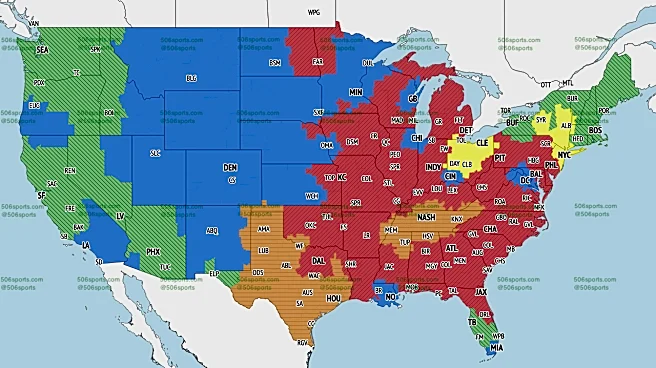
Television coverage, though increased, was still strictly regional due to the medium's infancy. Games played in Boston were primarily viewable in the Northeast. However, when the series shifted to Cleveland, those games became the first to be aired in major Midwestern cities such as Chicago, Pittsburgh, Milwaukee, St. Louis, Detroit, and Toledo. This regional expansion laid important groundwork for future national broadcasts and helped popularize baseball across different parts of the United States. The series was open to any channel affiliated with national broadcast networks like NBC, CBS, ABC, or DuMont, further solidifying its role in the early history of sports television.