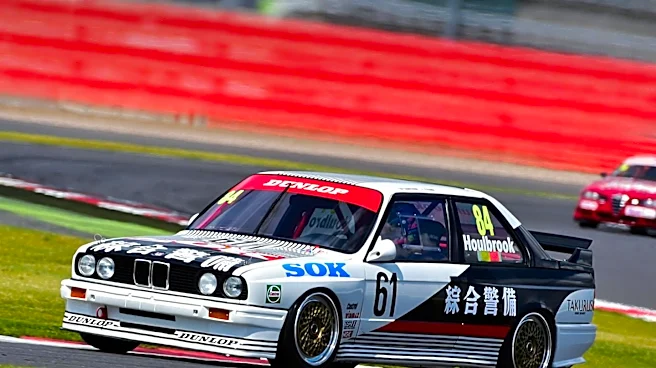




Group 2 was a significant classification in the world of motorsport, particularly in touring car racing and rallying. Established by the FIA, this class allowed for technical modifications beyond those permitted in Group 1, making it a popular choice for manufacturers and teams looking to push the boundaries of performance. The evolution of Group 2 cars reflects a fascinating period in racing history, marked by innovation and competition.
Origins and Early Years
The concept
of Group 2 cars was formalized in the FIA's Appendix J regulations for Touring and GT cars in 1954. By 1959, the term Group 2 was specifically used to define Touring Cars. The regulations required a minimum production of 1,000 units in twelve consecutive months for a model to be homologated into Group 2. This requirement ensured that the cars were based on production models, maintaining a connection to vehicles available to the general public.
In 1961, the FIA's Appendix J included specifications for both Group 1 Series Touring Cars and Group 2 Improved Touring Cars. The latter allowed for more extensive technical modifications, which attracted manufacturers eager to showcase their engineering prowess. This flexibility in modifications set the stage for the development of some of the most iconic touring cars of the era.
Peak Popularity and Competition
Group 2 cars gained significant traction in the 1960s and 1970s, becoming a staple in various racing series. The British Saloon Car Championship, for instance, was open to Group 2 cars from 1961 to 1965 and again from 1970 to 1973. This period saw fierce competition among manufacturers, each striving to outdo the other with innovative designs and engineering solutions.
The European Touring Car Challenge, held from 1963 to 1967, also featured Group 2 as the specified category. The series was later renamed the European Touring Car Championship in 1970, with Group 2 remaining the premier category until 1982. During this time, the cars were also eligible to compete alongside Group 5 special touring cars in 1968 and 1969, further cementing their status in the racing world.
Transition to Group A
Despite its popularity, the era of Group 2 came to an end in 1982 when it was replaced by Group A. This transition marked a shift in focus towards more standardized regulations and a greater emphasis on production-based cars. Group A required a higher production number for homologation, which aligned with the FIA's goal of making racing more accessible and competitive.
The legacy of Group 2, however, remains significant. It was a period characterized by rapid technological advancements and intense competition, laying the groundwork for future developments in touring car racing. The innovations and spirit of competition from the Group 2 era continue to influence motorsport to this day.