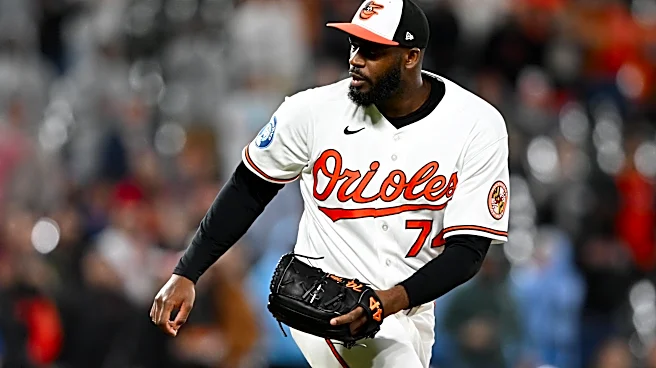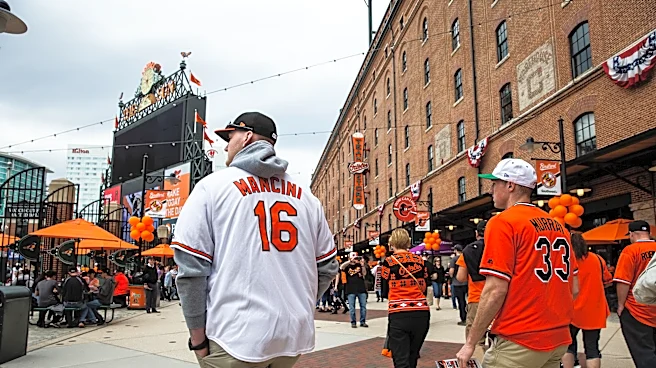


Eddie Murray's tenure with the Baltimore Orioles, spanning from 1977 to 1988, established him as a cornerstone of the franchise and a perennial force in Major League Baseball. Drafted by the Orioles in the third round of the 1973 amateur draft, Murray honed his skills in the minor leagues before making his highly anticipated major league debut on Opening Day, April 7, 1977. His immediate impact and consistent performance over more than a decade cemented
his place in Orioles history, marked by numerous accolades and a deep connection with the Baltimore fanbase.
Rookie Sensation and Early Career Highlights
Murray's rookie season in 1977 was nothing short of spectacular. Playing in 160 games, he posted a .283 batting average, hit 27 home runs, recorded 29 doubles, and drove in 88 RBIs. This impressive performance earned him the American League Rookie of the Year award, a significant achievement despite another player, Mitchell Page, having a better batting average and on-base plus slugging (OPS). Initially, Murray served as Baltimore's primary designated hitter, as veteran Lee May occupied the first base position. However, Murray's talent quickly became undeniable.
The following season, 1978, saw Murray named to his first All-Star Game, though he did not play in the game itself. He continued to improve his offensive numbers, batting .285 with 27 home runs, 32 doubles, and 95 RBIs in 161 games, often swapping positions with May. By 1979, Murray was a key offensive contributor, hitting .295 with 25 home runs, 30 doubles, and 99 RBIs. He participated in his first postseason that year, excelling in the American League Championship Series (ALCS) by going 5-for-12 with one home run, five RBIs, and five walks, leading the Orioles to victory over the California Angels in four games. This strong showing came just before the American League began naming an MVP for the League Championship Series.
World Series Appearances and Individual Accolades
Murray's career with the Orioles included two World Series appearances. In 1979, after his strong ALCS performance, his World Series performance against the Pittsburgh Pirates was hampered by a wrist injury sustained in Game 2. Despite starting strong with four hits in five at-bats and a home run in the first two games, he went 0-for-21 for the remainder of the series, and the Orioles ultimately lost in seven games. However, Murray would find World Series glory with Baltimore in 1983.
The 1983 season was a standout for Murray and the Orioles. He posted a career-high 33 home runs, along with a .306 batting average, 30 doubles, and 111 RBIs in 156 games. He was named to the All-Star Game, won his second consecutive Gold Glove Award, and received his first Silver Slugger Award. He also finished second in the MVP voting, trailing his teammate Cal Ripken Jr. In the 1983 ALCS, Murray hit .267 with one home run and three RBIs as the Orioles defeated the Chicago White Sox. In the World Series against the Philadelphia Phillies, he was instrumental in the series-clinching Game 5 victory, hitting two home runs in the 5-0 win. This championship marked Murray's only World Series title and his last postseason appearance for 12 years.
Consistent Excellence and Eventual Departure
Throughout the 1980s, Murray consistently delivered elite performance for the Orioles. In 1980, he achieved a career-first .300 batting average, hitting 32 home runs, 36 doubles, and 116 RBIs in 158 games. Even a potentially serious eye injury in July, when a ground ball took a bad hop and struck him, only briefly sidelined him; he returned to play and batted even better after the incident. The strike-shortened 1981 season saw him tie for the American League lead with 22 home runs and lead the league with 78 RBIs in just 99 games. He continued to rack up awards, including three consecutive Gold Glove Awards from 1982 to 1984 and two consecutive Silver Slugger Awards in 1983 and 1984. He played in all 162 games in 1984, the only time in his career, hitting .306 with 29 home runs and 110 RBIs, and walking a career-high 107 times.
Despite his on-field success, Murray's relationship with Orioles management began to deteriorate in 1986. He accused team officials of pressuring him to return too soon from an ankle injury. Later that year, criticism from team owner Edward Bennett Williams regarding his off-season work habits, defense, and lack of extra-base hits fueled his request for a trade. On December 4, 1988, Murray was traded to the Los Angeles Dodgers for Ken Howell, Brian Holton, and Juan Bell. The Orioles even paid $1 million of the $8 million still owed to Murray for the final three years of his contract. His departure was a significant moment in Baltimore sports history, with one sports columnist calling it "one of the lowest moments in this city's sports history," comparing it to other major team departures.