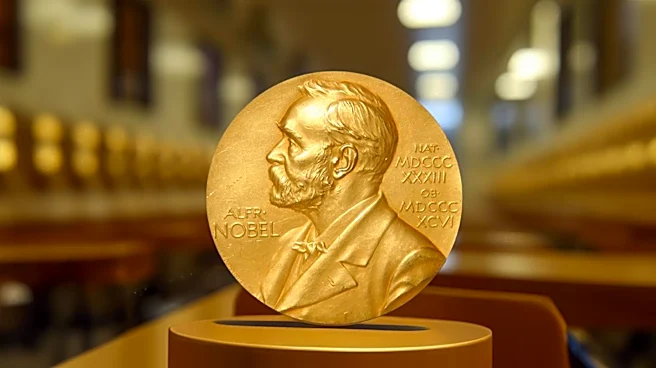





Harold Clayton Urey, a distinguished American physical chemist, is widely recognized for his Nobel Prize-winning discovery of deuterium, or heavy hydrogen, in 1934. However, his scientific impact extended far beyond this foundational work. Urey played a critical, though often less highlighted, role in one of the most significant scientific endeavors of the 20th century: the development of the atom bomb during World War II. Following this intense period,
his intellectual curiosity led him to explore fundamental questions about the universe, particularly contributing to theories on the development of organic life from non-living matter. His career thus bridges the realms of fundamental physics, wartime exigency, and astrobiological speculation.
Leading Isotope Separation for the Manhattan Project
With the onset of World War II, the scientific community mobilized to address the urgent demands of the conflict. Harold Urey's profound expertise in isotope separation, honed during his Nobel Prize-winning research, became indispensable. The challenge of uranium enrichment, crucial for the creation of an atomic weapon, required sophisticated methods to separate the fissile uranium-235 isotope from the more common uranium-238.
Urey took charge of a dedicated group at Columbia University tasked with this monumental problem. His team focused on developing isotope separation techniques using gaseous diffusion. This method involved converting uranium into a gaseous compound and then exploiting the slight mass difference between the isotopes to separate them through a series of porous barriers. The successful development of this gaseous diffusion method under Urey's leadership was a critical breakthrough for the Manhattan Project. It proved so effective that it became the sole method utilized for uranium enrichment in the early post-war period, underscoring the profound practical impact of his scientific leadership during a time of global crisis.
From Nuclear Physics to the Origins of Life
After the intense period of wartime research and his significant contributions to the atom bomb project, Harold Urey transitioned his focus to new scientific frontiers. His intellectual curiosity was not confined to the atomic nucleus; he began to explore broader questions about the universe and the origins of life itself. This shift demonstrated his versatility and his deep engagement with fundamental scientific inquiries.
Urey became a prominent figure in developing theories on how organic life might have emerged from non-living matter on early Earth. This area of research, often termed abiogenesis, seeks to understand the chemical processes that could have led to the first life forms. While the specific details of his contributions to these theories are complex, his involvement marked a significant expansion of his scientific interests from physical chemistry and nuclear applications to the nascent field of astrobiology. His post-war academic appointments, including professor of chemistry at the Institute for Nuclear Studies and later Ryerson professor of chemistry at the University of Chicago, provided him with the platform to pursue these diverse and profound scientific questions, further cementing his legacy as a multifaceted scientific pioneer.