




In May 1865, just weeks after the formal conclusion of the American Civil War, Washington, D.C., became the stage for a monumental event known as the Grand Review of the Armies. This military procession and celebration served as a powerful symbol of the Union's victory and a collective moment for the nation to acknowledge the end of a devastating conflict. Occurring on May 23–24, 1865, the review saw elements of the United States Army parade through
the capital's streets, receiving accolades from immense crowds and a host of dignitaries, including President Andrew Johnson, who had taken office a month prior following the assassination of Abraham Lincoln.
Planning and Purpose Amidst Mourning
President Andrew Johnson, on May 10, declared the rebellion and armed resistance to be virtually over. With this declaration, plans were set in motion with government authorities for a formal review to honor the Union troops. One significant objective behind organizing this grand event was to shift the mood of the capital, which was still deeply entrenched in mourning after President Lincoln's assassination. The review was intended to be a public display of unity and triumph, a way to signal a return to normalcy after years of war and recent tragedy. It was a deliberate effort to transition the national psyche from grief and conflict to celebration and peace.
Three of the leading Federal armies were strategically positioned close enough to Washington, D.C., to participate in this historic procession. The Army of the Tennessee arrived by train, while the Army of Georgia, also under the command of William T. Sherman, had just completed its Carolinas campaign and accepted the surrender of Joseph E. Johnston's Confederate army, the largest remaining. This Western army arrived from North Carolina in mid-May and established camps around the capital. Across the Potomac River, the Army of the Potomac, fresh from its victories over Robert E. Lee in Virginia, had arrived in Washington, D.C., on May 12. The convergence of these powerful forces in the capital created a unique atmosphere.
The March of the Potomac and Western Armies
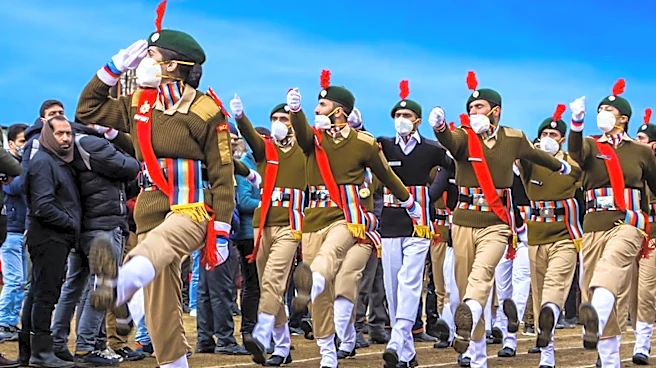
The Grand Review commenced on a bright, sunny morning, May 23, at 9:00 a.m., signaled by a single gun. Major General George Gordon Meade, renowned as the victor of Gettysburg, led an estimated 80,000 men of the Army of the Potomac down the streets of Washington. Their route stretched from Capitol Hill, along Pennsylvania Avenue, past crowds numbering in the thousands. The infantry marched with impressive precision, 12 men abreast, followed by the divisional and corps artillery. An array of cavalry regiments extended for another seven miles, showcasing the immense scale of the Union forces. The atmosphere was one of gaiety and celebration, with crowds and soldiers frequently joining in patriotic songs as the procession moved towards the reviewing stand in front of the White House.
At the reviewing stand, President Andrew Johnson, Commanding General Ulysses S. Grant, senior military leaders, Cabinet members, and leading government officials awaited. Meade, upon reaching the stand, dismounted and joined the dignitaries to salute his men, who continued to pass for over six hours. The following day, May 24, at 10:00 a.m., General Sherman led the 65,000 men of the Army of the Tennessee and the Army of Georgia. These Western armies, many of whom the admiring celebrities had never seen before, paraded for six hours under bright sunshine. The men who had marched through Georgia and defeated John Bell Hood's army in Tennessee were met by joyous throngs lining the sidewalks, with people peering from windows and rooftops to catch a glimpse of this formidable force.
A Return to Normalcy and Lasting Legacy
While Meade's army displayed remarkable military precision, Sherman's Georgia force presented a different spectacle. It was trailed by a vast crowd of people who had accompanied the army from Savannah, including freed blacks, laborers, adventurers, and scavengers. At the very end of Sherman's procession was a vast herd of cattle and other livestock, taken from Carolina farms, a vivid reminder of the army's long march. This unique aspect of Sherman's parade underscored the profound impact of the war and the diverse elements that followed in its wake.
Within a week after these grand celebrations, the two armies were disbanded. Many volunteer regiments and batteries were sent home to be mustered out of the army. Although minor guerrilla actions and racial violence, including the rise of the Ku Klux Klan, would continue in the South, the military conflict on land between the North and the South had effectively ended. The disbandment of the Union armies and the return home of fathers, brothers, and sons signaled to the population that they could begin to return to a normal life, marking the definitive end of the American Civil War. The Civil War provided the origins for Memorial Day celebrations across the United States, and today, the National Memorial Day Parade of the American Veterans Center marches through parts of the historic parade route used during the two days of parades in 1865, connecting the present to this pivotal moment in American history.