




The 1970 World Series between the Baltimore Orioles and the Cincinnati Reds was more than just a championship battle; it was a series steeped in historical significance and marked by several notable "firsts" and "lasts" for Major League Baseball. From the final afternoon-only games to groundbreaking representation on the field, this series captured a transitional period in the sport. The Orioles ultimately triumphed, but the context surrounding the games themselves
offers a rich tapestry of baseball history.
A Series of Lasts and Firsts
One of the most distinctive aspects of the 1970 World Series was that it was the last time all games were played exclusively in the afternoon. This marked the end of an era for World Series scheduling, as future series would increasingly incorporate evening games. It also represented the final World Series where teams wore wool flannel uniforms, a tradition that would soon give way to more modern fabric technologies. These details underscore a shift in the game's presentation and equipment, making the 1970 series a historical marker.
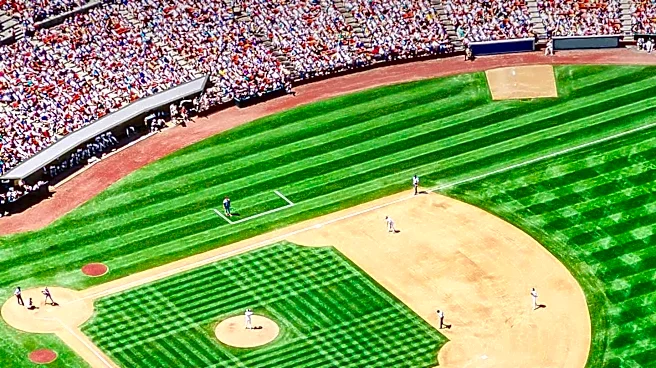
Beyond these "lasts," the series also introduced several significant "firsts." It was the first World Series to feature player names on the back of both team uniforms, a now-standard practice that was a novelty at the time. Furthermore, the series saw Emmett Ashford become the first African American to umpire a World Series game, a landmark moment for diversity and inclusion in professional baseball. The series also featured the first World Series games ever played on artificial turf, as Games 1 and 2 took place at Cincinnati's newly constructed Riverfront Stadium, showcasing a modern advancement in stadium technology.
The Big Red Machine's Early Appearance and Orioles' Dominance
The Cincinnati Reds, though ultimately defeated, were a formidable team in 1970, featuring a heavy-hitting lineup that would later become known as the "Big Red Machine." Their roster included future Hall of Famers Johnny Bench and Tony Pérez, alongside all-time hits leader Pete Rose and power hitter Lee May. Despite their offensive prowess, which led the National League in batting average, their pitching staff was hampered by injuries to key players like Jim Merritt and Wayne Simpson. Merritt, a 20-game winner, struggled with an arm injury and was unable to get through the second inning of Game 5, highlighting a critical weakness for the Reds.
In contrast, the Baltimore Orioles were a picture of strength and consistency. Managed by Earl Weaver, the Orioles boasted three healthy 20-game winners in Mike Cuellar, Dave McNally, and Jim Palmer. Their offense was equally impressive, featuring the 1970 AL MVP Boog Powell and future Hall of Famers Frank Robinson and Brooks Robinson. The Orioles' balanced attack, leading the AL in both runs scored and fewest runs allowed, proved too much for the Reds. Their victory in 1970 was the only World Series title for Earl Weaver's Orioles, despite their appearances in 1969, 1971, and 1979.
A Unique Series Outcome
The 1970 World Series also presented a rare statistical anomaly. It was only the third time in World Series history that a team leading three games to none failed to complete the sweep by losing Game 4, but still managed to clinch the series in Game 5. This had previously occurred in 1910 and 1937, and would later happen again in 2024. This particular sequence of events adds another layer to the series' unique place in baseball lore, demonstrating that even dominant teams can face a momentary setback before ultimately securing victory. The series also stands out as the last until 2017 where both participating teams had won over 100 games during the regular season, underscoring the high caliber of competition.