




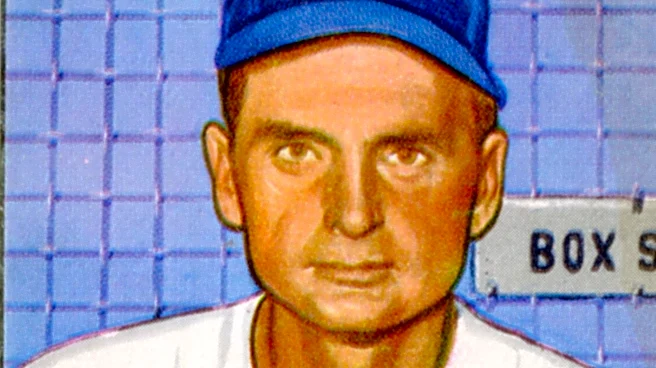
Before Walter Alston became renowned for his calm demeanor and strategic prowess as a Major League Baseball manager, he spent 13 seasons navigating the demanding landscape of minor league baseball as a player. This extensive playing career, though not reaching the pinnacle of the major leagues for long, provided him with a deep understanding of the game from a player's perspective. His experiences on various minor league teams, facing different levels
of competition, undoubtedly shaped his future approach to managing, emphasizing player development and team dynamics. This period was a crucial formative stage, laying the groundwork for his eventual success in the dugout.
A Solid Batting Record in the Minors
Throughout his 13-season minor league playing career, Walter Alston demonstrated a consistent ability at the plate. He maintained a respectable batting average of .295, indicating a reliable hitter over a significant period. This offensive production was further highlighted by his power numbers, as he accumulated 176 home runs during his time in the minor leagues. These statistics suggest that Alston was a valuable offensive asset to the teams he played for, capable of both getting on base and driving in runs.
His performance across different classifications of minor league baseball provided him with varied experiences. While his overall average was strong, his statistics also reveal the challenges of higher-level competition. In Class AA, which was considered the highest minor league classification through 1945, Alston hit .239 in 535 at-bats. This contrast between his overall minor league average and his performance at the top minor league level likely offered him insights into the adjustments players need to make as they advance through the system.
Transitioning from Player to Player-Manager
Alston's playing career eventually intertwined with his early managerial roles, as he took on player-manager responsibilities. This dual role allowed him to directly apply his on-field experience to leadership. For instance, he served as player-manager for the Springfield Cardinals in 1941 and 1942. This position required him to balance his own performance with the strategic oversight of the team, a challenge that would have deepened his understanding of both individual player needs and overall team management.
Later, he continued this dual role with the Trenton Packers in 1944 and 1945. These experiences as a player-manager were pivotal. They provided him with a unique perspective, allowing him to empathize with players while also making critical decisions from the dugout. His final professional playing appearances occurred in just two games during the season he led the Pueblo Dodgers to a Western League title, marking the official end of his playing days and a full transition into management.
The Impact of Minor League Experience on Future Management
The extensive time Alston spent as a minor league player and player-manager was foundational to his later success as a major league manager. His firsthand experience with the grind of minor league baseball, the challenges of player development, and the nuances of team dynamics provided him with a practical education that few could match. This background likely contributed to his reputation as a manager who understood his players and could guide them effectively. His journey through the minor leagues was not just a precursor to his managerial career but an integral part of shaping the Hall of Fame manager he would become.