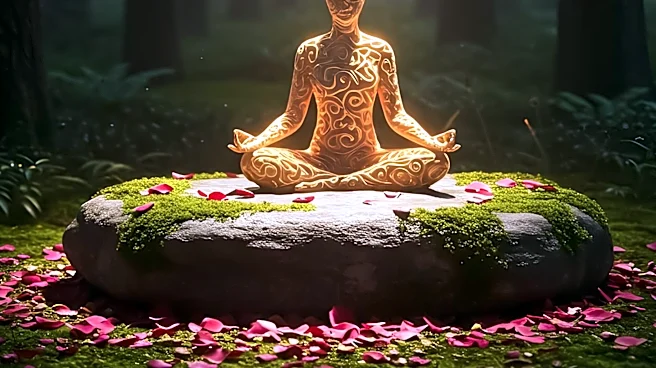

Taoist meditation, a practice deeply embedded in Chinese philosophy and religion, traces its origins back to the Warring States period (475–221 BCE). This era, known for its flourishing philosophical Hundred
Schools of Thought, saw the emergence of early meditative techniques focused on concentration, mindfulness, contemplation, and visualization. These foundational practices laid the groundwork for what would evolve into the rich and diverse tradition of Taoist meditation, emphasizing inner cultivation and a profound connection with the Way, or Dao.
Early Meditative Concepts in the Neiye
One of the earliest and most significant texts detailing these practices is the *Neiye*, or "Inward Training," believed to have been written in the 4th century BCE. Modern scholars consider the *Neiye* to be a manual on the theory and practice of meditation, offering the earliest references to breath control and the physiological basis of self-cultivation in the Chinese tradition. It is regarded by some as possibly the oldest 'mystical' text in China. The *Neiye* introduces key concepts such as *shouyi* ("maintaining the one") and *yunqi* ("revolving the qi"), which are central to its inner cultivation meditation.
*Shouyi* involves the adept concentrating solely on the Way, or a representation of it, while sitting in a calm and unmoving position. This technique aims to set aside the disturbances of perceptions, thoughts, emotions, and desires that typically occupy the conscious mind. The *Neiye* also contains the earliest Chinese reference to breath-control meditation, describing breathing as "coiling and uncoiling" or