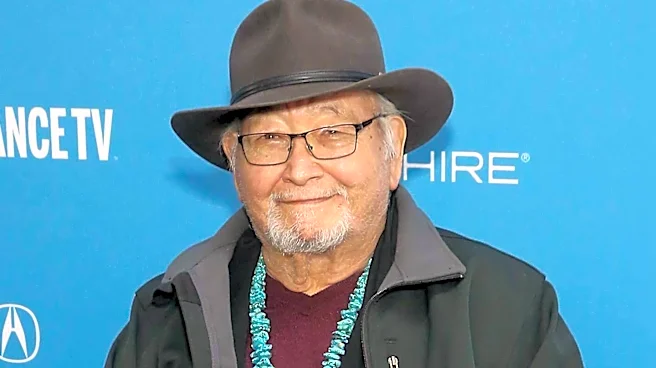




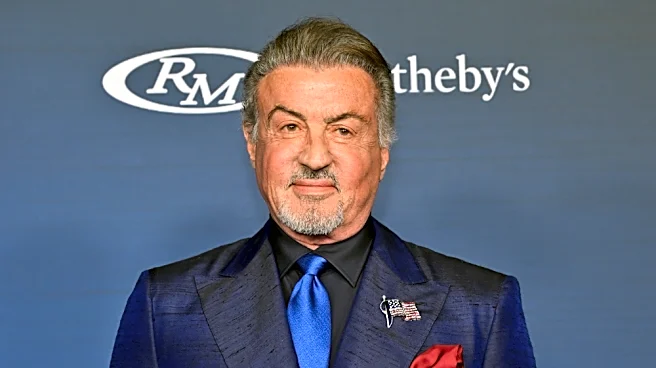

Wesley Studi's life journey is a testament to a diverse range of experiences, from his early years speaking only Cherokee to his distinguished military service, and ultimately, to his celebrated career as an actor and film producer. Born on December 17, 1947, in Nofire Hollow, Oklahoma, Studi grew up in a rural area of Cherokee County, named after his mother's family. His early life was deeply rooted in his Cherokee heritage, as he spoke only Cherokee at home
until he began elementary school. This foundational connection to his culture would later influence his work and advocacy.
His path to Hollywood was far from conventional, marked by significant periods of service and community involvement. Studi's unique background, combining a strong cultural identity with a disciplined military career, provided him with a depth of experience that he would eventually bring to his powerful on-screen portrayals.
Early Life and Military Service
Studi was born into a Cherokee family, with his mother, Maggie Studie, working as a housekeeper, and his father, Andy Studie, as a ranch hand. He attended Chilocco Indian Agricultural School for high school, graduating in 1964 with a vocational major in dry cleaning. This early education provided him with practical skills before his life took a significant turn towards military service.
In 1967, Studi enlisted in the United States Army. He served in the 39th Infantry Regiment during the Vietnam War, a period that included 12 months of combat duty. His service years spanned from 1963 to 1969, during which he achieved the rank of Sergeant. This experience in the military undoubtedly shaped his perspective and resilience, contributing to the gravitas he often brings to his acting roles. After his honorable discharge, Studi pursued further education at Tulsa Community College.
Post-Military Activism and Early Career Steps
Following his military service, Studi became politically active, engaging with the American Indian Movement from 1972 to 1974. He participated in the 1973 Wounded Knee occupation in the Pine Ridge Reservation, demonstrating his commitment to advocating for Native American rights. His involvement in these movements underscored a deep-seated dedication to his community and heritage, which would remain a constant throughout his life.
After his activism, Studi explored various paths, including operating a horse ranch. It was later, in the late 1970s, that a friend suggested he attend an acting workshop in Tulsa. This pivotal moment marked the beginning of his journey into the performing arts. He made his film debut in "The Trial of Standing Bear" in 1988, laying the groundwork for a career that would see him become one of the most recognizable and respected Native American actors.
A Legacy of Firsts and Continued Influence
Studi's career has been marked by significant achievements and groundbreaking moments. In 2019, he received an Academy Honorary Award, becoming the first Native American and the first Indigenous person from North America to be honored by the Academy. This recognition was not just for his acting prowess but also for the cultural significance of his work. He had previously made history as the second Native American actor to present at the Academy Awards, following Will Rogers in 1934.
His impact extends beyond awards; in December 2020, The New York Times ranked him No. 19 in its list of the "25 Greatest Actors of the 21st Century (So Far)." The article praised his ability to convey deep emotion and thought, noting his "expressive opacity" and his capacity to reveal both the outward facade and the inner life of his characters. Studi's journey from a Cherokee-speaking child in rural Oklahoma to a decorated veteran and an internationally acclaimed actor highlights a life rich with experience and profound contributions to both his community and the arts.