





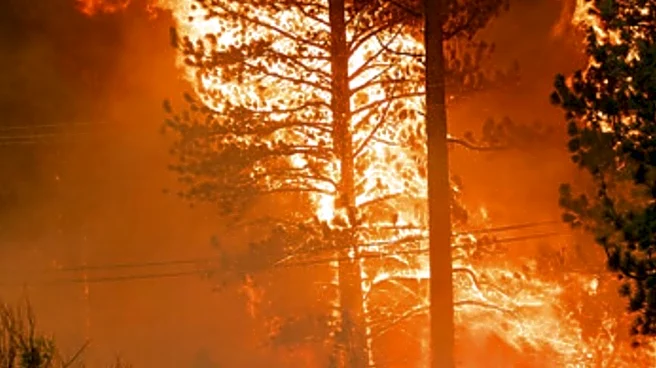
The year 2020 marked a historic and devastating wildfire season for California, setting new records for burned acreage and causing immense destruction across the state. More than four million acres, representing over four percent of California's approximately 100 million acres of land, were consumed by fires. This made 2020 the largest wildfire season recorded in California's modern history, though it was roughly equivalent to pre-1800 levels, which
averaged around 4.4 million acres yearly and could reach up to 12 million in peak years. The sheer scale of these fires led to significant impacts, including the destruction of thousands of structures and substantial financial costs.
Record-Breaking Destruction and Costs
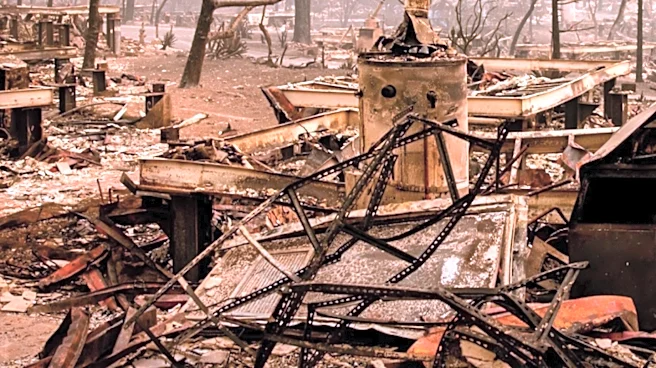
The 2020 California wildfires resulted in the destruction of over 10,000 structures. The financial toll was equally staggering, exceeding $12.079 billion in damages. This figure included over $10 billion in property damage alone, alongside $2.079 billion spent on fire suppression efforts. These costs positioned the 2020 season as the third-costliest on record for California. The human impact was also severe, with 33 fatalities and 37 injuries reported across the various incidents.
One of the most notable fires of the season was the August Complex, which was described as the first "gigafire." This massive blaze burned over one million acres across seven counties, an area larger than the state of Rhode Island, highlighting the extraordinary size and intensity of the fires that year. The August Complex also set a record on September 10, 2020, for the single-largest wildfire in California's modern history, initially reaching 471,185 acres before merging with the Elkhorn Fire to become a "monster wildfire" of 746,607 acres.
Contributing Factors and Emergency Response
The intensity of the 2020 fire season has been attributed to a combination of factors. More than a century of poor forest management practices, coupled with higher temperatures resulting from climate change, created conditions ripe for such widespread devastation. The season was further exacerbated by specific weather events, including a record-breaking heat wave and strong katabatic winds like the Jarbo, Diablo, and Santa Ana winds, which caused explosive fire growth in early September.
In response to the escalating crisis, Governor Gavin Newsom declared a state of emergency on August 18, 2020. The following day, the state was battling 367 known fires, many of which were sparked by intense thunderstorms on August 16–17. These thunderstorms were caused by moisture from the remnants of Tropical Storm Fausto. The response and evacuation efforts were further complicated by a historic heatwave and the ongoing COVID-19 pandemic. On August 22, 2020, President Donald Trump issued a major disaster declaration, providing individual and public assistance. Governor Newsom's request for a federal disaster declaration for six major wildfires was eventually approved on October 17, 2020, after an initial rejection.
Notable Individual Fires and Their Impact
Beyond the August Complex, other significant fires contributed to the 2020 season's severity. The Creek Fire expanded in the Big Creek drainage area, temporarily trapping hundreds of campers near the Mammoth Pool Reservoir. The North Complex also grew explosively due to winds, threatening the city of Oroville, triggering mass evacuations, and causing 16 fatalities. The Glass Fire, which started on September 27, 2020, burned over 67,484 acres and destroyed 1,555 structures, including 308 homes and 343 commercial buildings in Napa County, and 334 homes in Sonoma County. No injuries or deaths were reported from the Glass Fire, but an estimated 70,000 people were under evacuation orders in its vicinity. These individual incidents collectively underscore the immense and widespread impact of the 2020 California wildfire season.