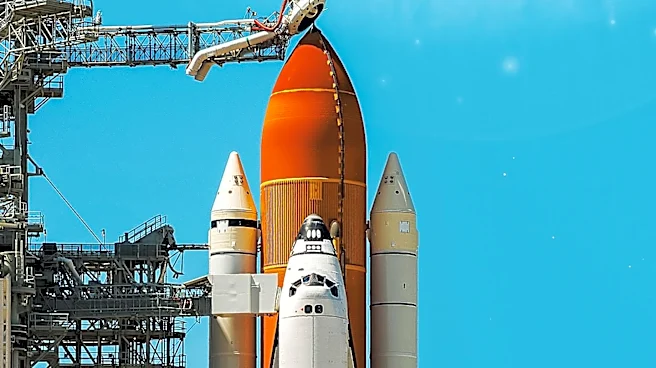





STS-95, a Space Shuttle mission launched in October 1998, was not only notable for its human element but also for its significant contributions to technological innovation and astronomical understanding. The mission carried several advanced payloads designed to push the boundaries of scientific research, from studying the Sun's outer atmosphere to validating components for the Hubble Space Telescope. These endeavors aimed to enhance our comprehension
of the cosmos and improve the capabilities of future space missions, demonstrating the multifaceted nature of Space Shuttle operations.
The scientific objectives of STS-95 extended beyond life sciences, focusing heavily on increasing astronomical understanding, particularly concerning the Sun and its effects on Earth. The mission's payloads were carefully selected to address critical questions about solar phenomena and to test cutting-edge space technologies. This dual focus on fundamental research and technological development was a hallmark of the STS-95 mission, yielding valuable data and insights for the scientific community.
Unveiling Solar Secrets with Spartan 201
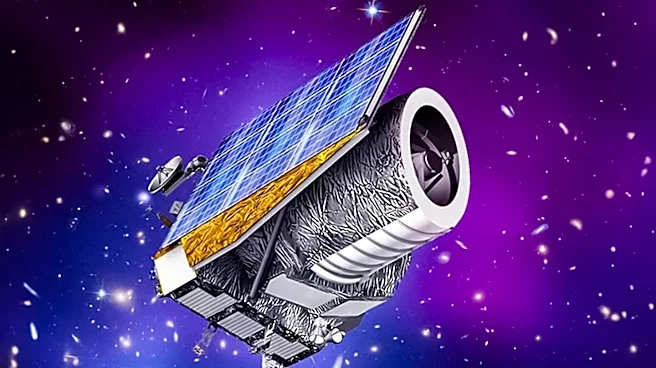
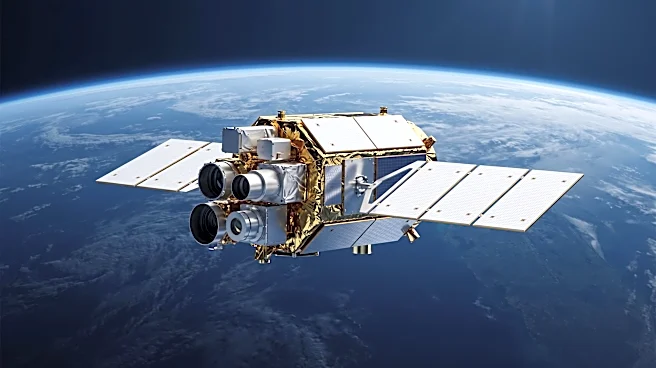
A key astronomical component of STS-95 was the Spartan 201-5 free-flyer. This uncrewed spacecraft was deployed and later retrieved using the Space Shuttle's mechanical arm. Its primary purpose was to investigate the physical conditions and processes occurring in the hot outer layers of the Sun's atmosphere, known as the solar corona. While flying independently from the Shuttle, Spartan gathered crucial measurements of the solar corona and the solar wind.
NASA anticipated that the information collected during this mission would significantly improve the understanding of solar winds. These solar winds directly influence orbiting satellites and Earth's weather conditions, which in turn impact vital communications systems like television and phone services. This was the fifth flight for the Spartan payload, which had a history of successful missions, though it had experienced attitude control system issues on its previous flight, STS-87, in November 1997. These issues were resolved, allowing Spartan to successfully perform its intended experiments on STS-95, reiterating its importance in solar research.
Advancing Hubble and Extreme Ultraviolet Exploration
Another critical aspect of STS-95 involved the Hubble Space Telescope Orbital Systems Test (HOST) platform. This platform was designed to validate components planned for installation during the third Hubble Space Telescope servicing mission and to evaluate new technologies in an Earth-orbiting environment. The HOST platform hosted four distinct experiments. One notable experiment was the NICMOS Cooling System, which underwent zero-gravity verification for a reverse turbo Brayton cycle cryocooler, promising a longer operational life than the dewar system then in use on Hubble.
Additionally, the HOST platform tested the HST 486 computer to identify any radiation-susceptible parts in the DF-224 replacement computer for the third servicing mission and to demonstrate hardware and software responses to Single Event Upsets (SEUs). A solid-state recorder experiment compared the on-orbit operation of a flight-spare unit with the one installed in Hubble. The mission also carried the International Extreme Ultraviolet Hitchhiker (IEH) payload, comprising half a dozen experiments. These included the Solar Extreme Ultraviolet Hitchhiker (SEH) for obtaining EUV and FUV fluxes vital for studying Earth's upper atmosphere, and the Ultraviolet Spectrograph Telescope for Astronomical Research (UVSTAR), designed to measure EUV fluxes for imaging extended plasma sources such as Jupiter and hot stars.