




Batman Returns, directed by Tim Burton, is a 1992 superhero film that stands out for its unique style and darker tone. This film, a sequel to the 1989 Batman, brought together a talented cast and crew to create a visually striking and thematically rich movie. The production of Batman Returns was a complex process, involving significant changes from its predecessor and a focus on creative control for Burton.
Creative Control and Script Development
Tim Burton initially hesitated to direct
a sequel to Batman, feeling constrained by the expectations of Warner Bros. However, he agreed to return after securing greater creative control, which allowed him to shape Batman Returns into a more personal and distinctive film. This creative freedom led to the replacement of the original writer, Sam Hamm, with Daniel Waters, whose script emphasized character development over plot.
Waters's approach to the script was to focus on the villains, particularly the Penguin and Catwoman, giving them depth and complexity. The Penguin, played by Danny DeVito, was reimagined as a tragic figure, while Catwoman, portrayed by Michelle Pfeiffer, was developed as a symbol of contemporary feminism. This focus on character allowed Burton to explore themes of duality and identity, which are central to the film.
Casting and Characterization
Casting for Batman Returns was a meticulous process, with Michael Keaton reprising his role as Batman. The role of the Penguin was initially considered for actors like Marlon Brando and Dustin Hoffman, but ultimately went to Danny DeVito, whose performance brought a unique blend of pathos and menace to the character. Michelle Pfeiffer's portrayal of Catwoman is often regarded as one of the best in the superhero genre, combining strength, intelligence, and a touch of vulnerability.
The film also introduced a new character, Max Shreck, played by Christopher Walken. Shreck was created to replace Harvey Dent/Two-Face and served as a satirical representation of corporate greed and corruption. This character added another layer to the film's exploration of power and morality.
Visual Style and Production Design
Batman Returns is renowned for its visual style, which was heavily influenced by German Expressionism and neo-fascist architecture. Production designer Bo Welch created a Gotham City that was both oppressive and visually stunning, with towering skyscrapers and dark, shadowy streets. The film's sets were constructed on soundstages in California, allowing for greater control over the film's aesthetic.
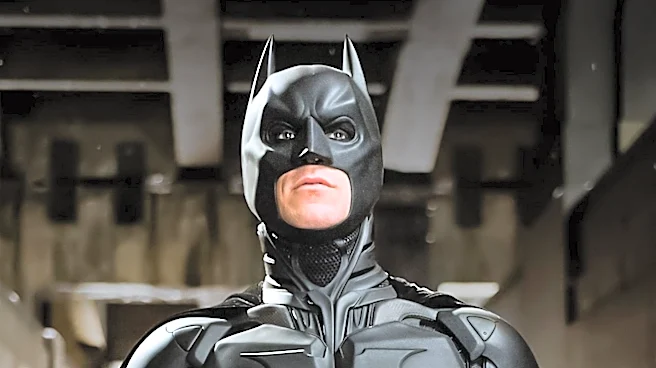
The costume design also played a crucial role in the film's visual impact. The Batsuit was updated to have a more mechanical look, while Catwoman's latex suit became iconic for its stitched-together appearance. These design choices contributed to the film's unique atmosphere and helped establish Batman Returns as a standout entry in the superhero genre.