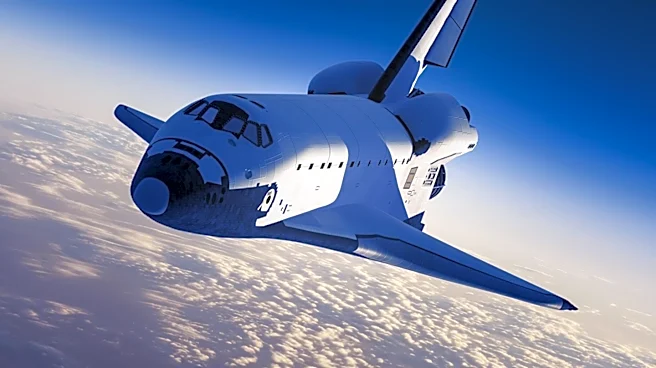






In the history of space exploration, the STS-94 mission stands out as a unique event. This mission, flown by the Space Shuttle Columbia in July 1997, was a reflight of the earlier STS-83 mission. What makes STS-94 particularly notable is that it was conducted with the exact same crew and objectives as its predecessor, marking the only time in human spaceflight history that two missions with more than one crewmember had identical crews. This article
delves into the circumstances that led to this reflight and the mission's significance.
The Circumstances Leading to Reflight
The original mission, STS-83, launched on April 4, 1997, was intended to last for over 15 days. However, a technical issue with Fuel Cell #2 forced an early termination after just under four days in orbit. The mission's primary objective was to conduct microgravity research using the Microgravity Science Laboratory (MSL), a collection of experiments housed in a European Spacelab Long Module. Due to the premature end of STS-83, NASA decided to reattempt the mission as STS-94.
The decision to reflight the mission with the same crew was unprecedented. Typically, after a mission, the shuttle undergoes extensive maintenance and the crew is rotated. However, given the importance of the scientific objectives and the short duration of STS-83, NASA opted for a quick turnaround. This decision allowed the same team of astronauts to complete the mission's scientific goals without the usual lengthy delays associated with crew changes and shuttle refurbishment.
The Crew and Their Mission
The STS-94 crew consisted of seven astronauts: Commander James D. Halsell, Pilot Susan L. Still, and Mission Specialists Janice E. Voss, Michael L. Gernhardt, Donald A. Thomas, Roger K. Crouch, and Gregory T. Linteris. Each member brought significant experience to the mission, with several having flown multiple times before. Their familiarity with the mission's objectives and equipment was a key factor in the decision to reflight with the same team.
The mission's primary focus was on microgravity research, utilizing the MSL to conduct 19 materials science investigations. These experiments were crucial for understanding the effects of microgravity on various materials and processes, contributing valuable data for future space missions and scientific research.
Achievements and Legacy
STS-94 successfully completed its 15-day mission, achieving all its scientific objectives. The mission's success demonstrated the feasibility and benefits of reflight under certain circumstances, providing a model for future missions that might face similar challenges. The data collected from the MSL experiments contributed to a deeper understanding of microgravity's impact on materials science, influencing subsequent research and missions.
The reflight of STS-94 remains a unique chapter in space exploration history, showcasing NASA's adaptability and commitment to scientific advancement. It highlights the importance of perseverance and innovation in overcoming challenges, ensuring that critical scientific objectives are met despite unforeseen setbacks.