




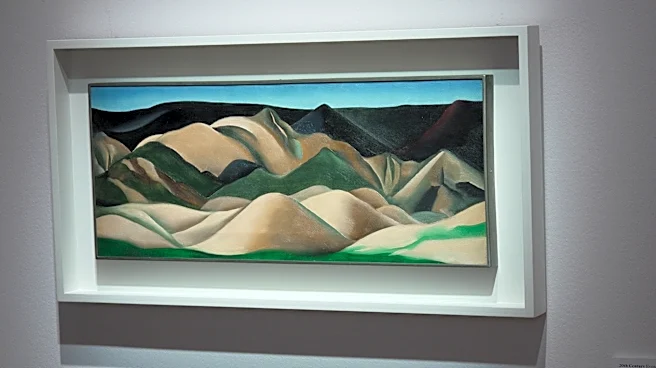
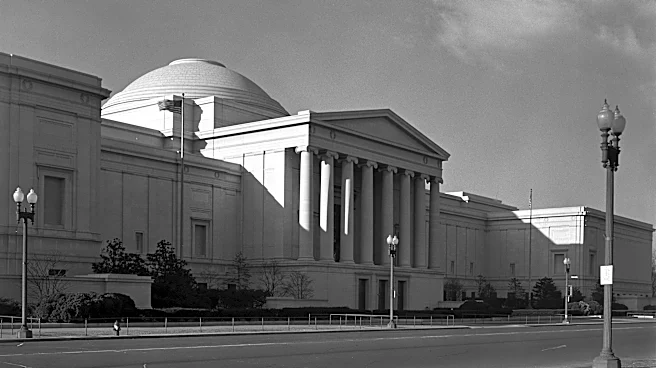
The Whitney Biennial, organized by the Whitney Museum of American Art in New York City, stands as a crucial barometer of contemporary American art. Since its inception in 1932, this exhibition series has evolved significantly, adapting its format and responding to the ever-changing landscape of artistic expression and societal concerns. Widely regarded as the most important survey exhibition of contemporary art in the United States, the Biennial has played
a pivotal role in bringing artists like Georgia O'Keeffe, Jackson Pollock, and Jeff Koons to national prominence.
Evolution of the Exhibition Format
The Whitney Biennial did not begin in its current form. The series launched in 1932 with large group exhibitions of invited American artists, initially structured as biennials that ran on two parallel cycles. Painting exhibitions were held in even years (1932, 1934, 1936), while sculpture, watercolors, and prints were featured in odd years (1933, 1935). This alternating medium approach allowed for focused presentations of different artistic practices.
In 1937, the museum reformatted the series into annuals, typically showcasing painting in the fall and sculpture and related media in the spring. The first combined "Annual Exhibition of Contemporary American Art" took place in 1940, though the format continued to vary over the next few years, with the last combined annual held in 1943–44. From that point until 1973, the annuals continued to alternate between painting and sculpture. It was in 1973 that the museum returned to a biennial format, establishing the single, all-media exhibition held every other year that continues to the present day. The Whitney Museum has also experimented with its organizational approach, utilizing its own staff, inviting outside curators, including Europeans, and even engaging a former art dealer to help organize the show.
Controversies and Social Commentary
Throughout its history, the Whitney Biennial has often found itself at the center of social and political debates, reflecting broader tensions within the art world and society. The 1987 show, for instance, faced protests from the Guerrilla Girls, who criticized it for alleged sexism and racism. This highlights the ongoing struggle for representation and inclusivity within major art institutions.
The 1993 edition of the Biennial was particularly notable for its "political" focus. It featured works like Pepón Osorio's installation "Scene of the Crime (Whose Crime?)" depicting a Hispanic family's living room, and Daniel Joseph Martinez's metal buttons bearing the message "I can't imagine ever wanting to be white." This exhibition was considered the most diverse by a major American museum at the time, a significant shift from 1970 when less than 1% of artists at the Whitney Museum were non-white. Despite its intentions, some critics, like Roberta Smith, found it "pious, [and] often arid," while art historian Robert Hughes criticized the lack of painting and the focus on "exclusion and marginalization." The 1993 Biennial also gave significant attention to video works, dedicating two entire galleries to them, and featured text-heavy installations that demanded active participation from viewers.
More recent Biennials have also sparked controversy. The 2014 edition faced criticism for its lack of diversity, with only nine out of 109 artists being black or African American. A fictional character, Donelle Woolford, created by a white artist, was the only black female artist included in one curator's exhibition, drawing strong criticism. The YAMS Collective, a group of mostly black and queer artists, writers, and performers, participated in and then withdrew from the 2014 Biennial as a protest against the Whitney Museum's policies. The 2017 Biennial featured Dana Schutz's controversial painting of Emmett Till, "Open Casket," which led to protests and calls for its removal and destruction. The 2019 Biennial saw a boycott by artists protesting the museum's vice chairman, Warren Kanders, due to his company's sale of military supplies used in controversial contexts. These instances underscore the Biennial's role not just as an art exhibition, but as a site for critical dialogue and protest concerning art, politics, and social justice.