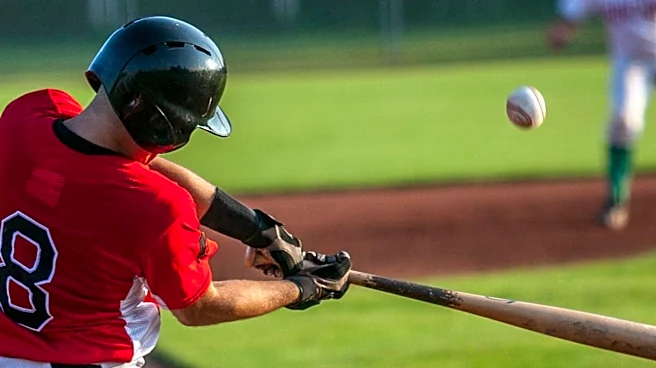







Softball, a sport that began as an indoor pastime, quickly adapted to outdoor environments, demonstrating its versatility and broad appeal. Invented by George Warren Hancock in 1887, the game's initial form was played within the confines of the Farragut Boat Club in Chicago. However, its inherent flexibility allowed for a swift transition to outdoor settings, leading to its widespread adoption and the development of formal rules. This evolution from
an impromptu indoor game to a structured outdoor sport highlights the dynamic nature of its early development.
The Indoor Beginnings and Early Popularity
The very first game of softball, then known as indoor baseball, was played on Thanksgiving Day, November 24, 1887. This event was sparked by a playful incident following a Yale-Harvard football game, where a balled-up boxing glove was used as an improvised ball and a broom handle as a bat. George Hancock, a reporter, quickly organized the game, chalking a diamond on the floor of the Farragut Boat Club. This spontaneous creation rapidly captured the interest of participants and spectators alike.
The game's popularity grew almost immediately. Within the same year of its invention, 1887, the sport had already crossed borders, with a league forming in Toronto. This early international expansion underscored the game's universal appeal. To support its burgeoning popularity, the "Indoor Baseball Guide" was published in 1887. This publication served as the first nationally distributed resource for the new game, providing guidance and standardization for players and enthusiasts. The guide remained an important reference for a decade, helping to solidify the game's early structure and rules.
Transition to Outdoor Play and Formalization
The spring of 1888 marked a significant turning point for the sport as it moved outdoors. This adaptation allowed the game to be played on a smaller diamond than traditional baseball, leading to its new designation as "indoor-outdoor." This flexibility in playing environment was crucial for its continued growth, making it accessible in various settings. The sport's increasing mass appeal necessitated a more formal structure, prompting George Hancock to publish the first set of indoor-outdoor rules in 1889.
These rules were vital for establishing consistency and fair play as the game continued to spread. The formalization of rules helped to define the sport, moving it beyond its initial improvised nature. The 16-inch softball variant, which more closely resembles Hancock's original game, remains popular in Chicago today. This variant is notable for using a larger ball and often being played without gloves, reflecting some of the original game's characteristics. The enduring popularity of this variant, particularly in its city of origin, speaks to the lasting impact of Hancock's initial invention and the sport's adaptable nature.
Enduring Legacy and Modern Variants
The journey of softball from an indoor novelty to a widely recognized outdoor sport is a testament to its engaging gameplay and adaptability. The early publications and rule sets established by Hancock were foundational in this evolution. While the game has seen many changes and new variants over the years, the core principles established in those early days continue to resonate. The 16-inch softball, for instance, maintains a direct link to the game's origins, preserving a piece of its history. This variant's continued presence, especially in Chicago, highlights how the sport has maintained connections to its roots while also evolving into the diverse forms seen globally today.