





Azerbaijan, officially known as the Republic of Azerbaijan, is a country with a unique geographical and historical identity, situated at the boundary of Western Asia and Eastern Europe. This transcontinental nation is an integral part of the South Caucasus region, bordered by the Caspian Sea to the east, Russia's republic of Dagestan to the north, Georgia to the northwest, Turkey (via the exclave of Nakhchivan) and Armenia to the west, and Iran to the south.
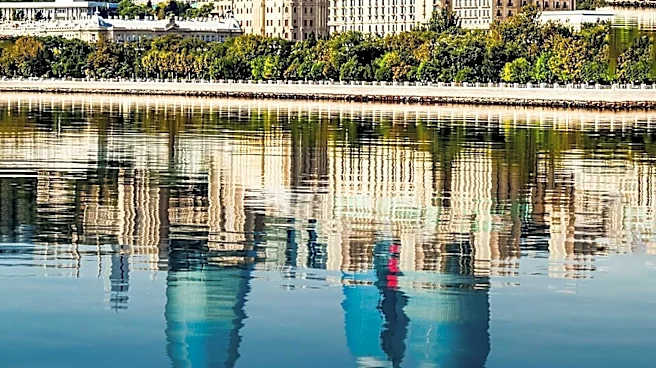
Its capital and largest city is Baku, a vibrant center that reflects the country's rich past and present. Azerbaijan's location has historically placed it at the intersection of major civilizations, influencing its culture, politics, and development over centuries.
Ancient Roots and Persian Influence
The territory that constitutes modern-day Azerbaijan boasts a long and complex history, marked by the rule of various powerful empires. Initially, the region was governed by Caucasian Albania, an ancient kingdom that played a significant role in the early history of the Caucasus. Following this period, the land fell under the sway of several Persian empires, which exerted a profound and lasting cultural influence on the area. This Persian dominance continued for many centuries, shaping the societal structures, artistic traditions, and religious practices of the local populations.
Until the 19th century, Azerbaijan remained largely a part of Qajar Iran. However, the geopolitical landscape began to shift dramatically with the advent of the Russo-Persian wars. These conflicts, specifically the wars of 1804–1813 and 1826–1828, proved to be pivotal. The Qajar Empire was ultimately compelled to cede its Caucasian territories to the expanding Russian Empire. The treaties of Gulistan in 1813 and Turkmenchay in 1828 formally defined the new border between Russia and Iran, effectively splitting the historical Azeri lands. The region north of the Aras River, which forms a significant part of present-day Azerbaijan, was thus conquered by Russia in the 19th century and subsequently administered as part of the Caucasus Viceroyalty.
Soviet Era and Path to Independence
The 20th century brought further transformations to Azerbaijan, particularly with the rise of the Soviet Union. The Azerbaijan Soviet Socialist Republic (Azerbaijan SSR) was established on April 28, 1920, following the Red Army's invasion. Initially, the Azerbaijani SSR functioned as an independent country for its first two years, until it was incorporated into the Transcaucasian SFSR alongside the Armenian SSR and the Georgian SSR. In December 1922, the Transcaucasian SFSR became a constituent part of the newly formed Soviet Union. The Constitution of the Azerbaijan SSR was approved on March 14, 1937, by the 9th Extraordinary All-Azerbaijani Congress of Soviets.
As Soviet control began to wane in the late 20th century, Azerbaijan embarked on its journey toward renewed independence. On February 5, 1991, the Azerbaijan SSR was officially renamed the Republic of Azerbaijan, a significant step towards its full sovereignty. This period marked the end of decades of Soviet rule and the beginning of a new chapter for the nation. Since gaining independence, Azerbaijan has established diplomatic relations with 182 countries and holds membership in 38 international organizations, including the United Nations, the Council of Europe, the Non-Aligned Movement, and the Organization for Security and Co-operation in Europe (OSCE). It is also a founding member of GUAM, the Commonwealth of Independent States, and the OPCW, and an observer state of the World Trade Organization, demonstrating its active engagement in the global community.
Modern Governance and International Standing
Today, Azerbaijan operates as a unitary semi-presidential republic. It is recognized as one of six independent Turkic states and is an active member of the Organization of Turkic States and the TÜRKSOY community, reflecting its cultural and linguistic ties. The country's capital, Baku, continues to be its political, economic, and cultural hub. The nation's journey from ancient rule to Soviet republic and finally to an independent state highlights its resilience and strategic importance in the South Caucasus region. Its active participation in numerous international bodies underscores its commitment to global cooperation and its evolving role on the world stage.