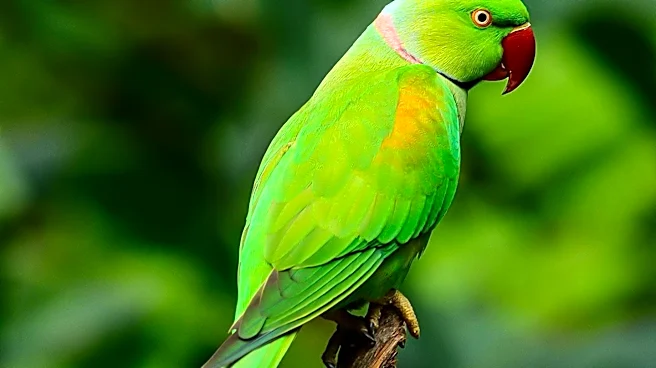








The rose-ringed parakeet has a rich and extensive history in aviculture, making it a popular choice as a pet across various cultures and eras. Its adaptability, distinctive appearance, and capacity for mimicry have contributed to its enduring appeal, leading to its widespread presence in homes and the development of numerous captive-bred variations.
A Long History as Companion Birds
Human fascination with the rose-ringed parakeet dates back to antiquity. Historical records indicate
that these birds were kept as pets by ancient civilizations. The ancient Greeks, for instance, were known to keep the Indian subspecies, *P. krameri manillensis*. Similarly, the ancient Romans kept the African subspecies, *P. krameri krameri*. This long history underscores the species' suitability for domestication and its ability to form bonds with humans, making it a cherished companion bird for millennia.
Today, the rose-ringed parakeet remains a highly sought-after pet. Its intelligence and engaging personality contribute to its popularity among bird enthusiasts. Owners and breeders often provide supplements containing calcium carbonate, vitamin D3, and other minerals and vitamins to support calcium absorption, which is crucial for preventing egg-laying problems and brittle bones, especially in breeding females.
The Art of Mimicry and Speech
One of the most remarkable traits of the rose-ringed parakeet, and a significant factor in its popularity, is its ability to mimic human speech. Both male and female birds possess this talent. The process involves the bird listening intently to its surroundings and then copying the voice of a human speaker. This capacity for clear speech sets them apart from many other talking parrots.
Many individuals hand-raise rose-ringed parakeet chicks specifically to encourage this mimicry. Birds that are hand-raised from a young age tend to become quite tame and receptive to learning, making them more proficient at mimicking human words and phrases. Their vocal clarity is often noted as exceptionally clear compared to other parrot species known for their talking abilities, adding to their appeal as interactive pets.
Captive Breeding and Color Mutations
Through selective breeding in aviculture, a wide array of color mutations has been developed in rose-ringed parakeets. While wild birds typically display a distinctive green color with a red beak and blue tail, captive breeding has introduced a spectrum of new hues. These mutations include turquoise, cinnamon, olive, white, blue, violet, grey, and yellow.
In recent years, color mutations of the Indian rose-ringed parakeet subspecies have become widely available, offering pet owners a diverse choice of appearances. A particularly common and popular mutation is the blue color morph. Birds displaying this mutation feature solid light blue feathers instead of the natural green. This genetic variation highlights the extensive efforts of breeders to enhance the aesthetic diversity of this already beautiful species, further cementing its place as a beloved pet in modern aviculture.