



Samuel Robert Gibson, born on November 16, 1931, in Brooklyn, New York, emerged as a pivotal figure in the American folk music revival of the late 1950s and early 1960s. Primarily known for his mastery of the banjo and 12-string guitar, Gibson's career was marked by significant collaborations and a profound influence on a generation of musicians. His journey began with an early interest in vocal music, leading him to hitchhike across the country before
immersing himself in the study and performance of folk music.
Early Life and Musical Awakening
Gibson's childhood saw him grow up in various communities outside New York City, including Tuckahoe, Yorktown Heights, and Tompkins Corners. His initial musical inclinations were predominantly vocal. After leaving high school in his senior year, he embarked on a period of hitchhiking around the country, an experience that likely broadened his perspective and informed his later artistic endeavors.
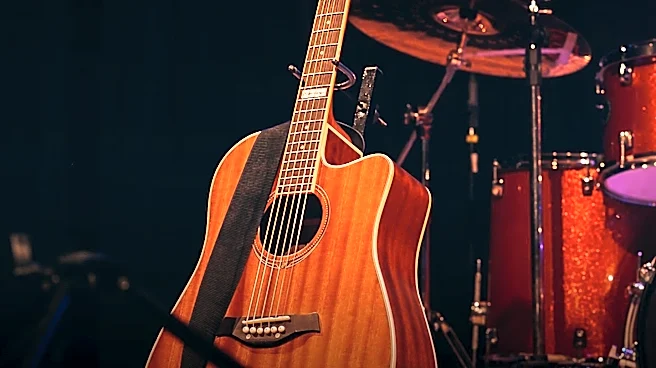
Upon returning to New York City in the late 1940s, Gibson took a job in sales and public relations for a speed-reading firm. A significant turning point occurred in 1953 when he met Pete Seeger, a renowned folk musician. Gibson was so impressed by Seeger and his music that he used money he had saved for rent to purchase a banjo, much to his wife Rose's initial dismay. He subsequently quit his job and dedicated the next year to teaching himself the banjo and delving deeply into folk music studies. By the age of 22, Gibson had begun performing in diverse venues, from schools and ladies' social clubs to lounges and cabarets in cities like New York, Miami, and Cleveland, and even aboard cruise ships traveling to Caribbean islands.
Rise in the Chicago Folk Scene
Gibson's career gained significant momentum when he was hired at the Green Door in Michigan City, Indiana, located 50 miles east of Chicago. In 1955, he was booked into Chicago's Off-Beat Room, where he met Albert Grossman, a key figure who would later open the influential folk club Gate of Horn. Gibson became a regular performer at Gate of Horn, initially as an opener and eventually as a headliner, performing there for eleven months. Grossman's booking choices brought numerous talented artists to the club, including Josh White, Glenn Yarborough, Odetta, Hamilton Camp, Judy Collins, and Joan Baez.
It was Gibson who introduced Joan Baez to a national audience for the first time at the 1959 Newport Folk Festival. His recognition in Chicago steadily grew in the early 1960s, a period aided by his collaboration with Hamilton Camp. Their debut album, "Gibson and Camp at the Gate of Horn," released on Elektra Records in 1961, became a watershed moment, influencing musicians ranging from John Lennon and Gordon Lightfoot to John Denver. Lightfoot's "Canadian Railroad Trilogy," for instance, was patterned after Gibson and Camp's "Civil War Trilogy."
Influence and Later Collaborations
Gibson and Camp also became regular performers at the iconic Village Gate in New York City, which Art D'Lugoff opened in 1958. D'Lugoff suggested they add a female voice to their duo, a recommendation they rejected. He then made the same suggestion to Peter Yarrow and Paul Stookey, leading to the formation of Peter, Paul and Mary, a trio deeply influenced by Gibson's music. Peter Yarrow later acknowledged this influence, stating, "When you listen to PPM, you are hearing Bob Gibson."
Another significant collaboration for Gibson was with Shel Silverstein, then a cartoonist for Playboy. Silverstein, a regular fan, caught Gibson's attention by completing lyrics to an unfinished Gibson tune. This led to a close friendship and a prolific songwriting partnership, with the two writing over 200 songs together over 35 years. Their final joint project was the 1993 album "Makin' A Mess," produced by Silverstein and Kyle Lehning and released on Asylum Records. The album's last track, "Whistlers and Jugglers and Singers of Song," was a last-minute addition, written about the relationship of "the trio from out of our past" and a girl who loved a singer, getting together with him several years before his death. Gibson's career, though interrupted by addiction, saw him continue his artistic pursuits with albums, musicals, plays, and television performances, even as the musical landscape changed.