




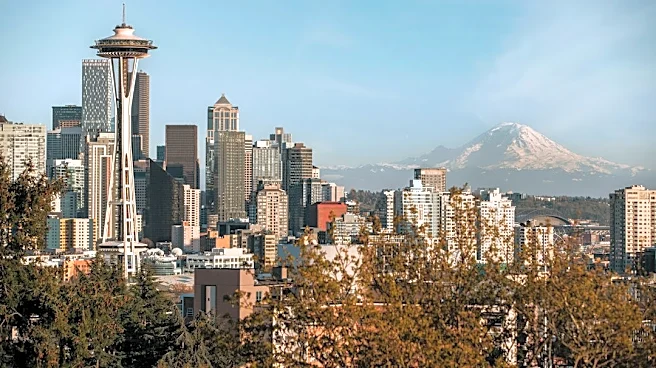

Seattle, a significant port city in the Pacific Northwest, has a history characterized by distinct cycles of boom and bust. On multiple occasions, the city has faced severe decline, yet it has consistently leveraged these periods to successfully reconstruct and enhance its infrastructure. This pattern of decline followed by rapid rebuilding has shaped Seattle's development, with at least five such cycles identifiable throughout its history. This resilience
in the face of adversity has allowed Seattle to transform from a nascent settlement into the major urban center it is today.
Early Foundations and Initial Challenges
The area now known as Seattle has been inhabited for at least 4,000 years, since the end of the last glacial period around 8,000 B.C. In the mid-1850s, the Coast Salish people, including the Duwamish and Suquamish tribes, lived in numerous villages within the present-day city limits. European contact began in May 1792 with George Vancouver's expedition. The founding of Seattle is often dated to the arrival of the Denny Party scouts on September 25, 1851, though a farming settlement was established earlier by Luther Collins, Henry Van Asselt, and the Maple family on September 27, 1851, in what is now Georgetown.The Denny party initially settled at Alki Point but later moved to a more protected site on Elliott Bay, which became downtown Seattle. Early on, the city's economy was heavily reliant on the timber industry, shipping logs and later milled timber to San Francisco. The region was covered by a climax forest with trees reaching up to 400 feet tall and 1,000-2,000 years old, a size no longer found anywhere in the world. Henry Yesler's introduction of the first steam sawmill solidified Seattle's dominance in the lumber industry. Despite being founded by Methodists, early Seattle gained a reputation as a "wide-open town" with prostitution, liquor, and gambling, partly attributed to Doc Maynard's efforts to attract loggers and sailors.
Incorporation, Voided Charters, and the Great Fire
Seattle was first incorporated as a town on January 14, 1865. However, this charter was voided on January 18, 1867, due to questionable activities by the town's elected leaders. The city was re-incorporated on December 2, 1869. At these times, the population was approximately 350 and 1,000, respectively. During this period, relations with the local Native American population were sometimes tense, culminating in the Battle of Seattle on January 25, 1856.A significant turning point was the Great Seattle Fire of June 6, 1889. Started by a glue pot, the fire devastated 29 city blocks, primarily wooden buildings, and destroyed nearly the entire business district, all railroad terminals, and all but four wharves. This event, though catastrophic, spurred a rapid rebuilding effort. With credit arranged by Jacob Furth, Seattle rebuilt quickly, adopting a new zoning code that mandated brick and stone buildings downtown instead of wood. In the year following the fire, the city's population surged from 25,000 to 40,000, largely due to the massive construction jobs created, demonstrating the city's remarkable ability to rebound and grow from disaster.