


The St. Louis Browns, a Major League Baseball team, spent 52 years in St. Louis, Missouri, from 1902 to 1953. While they were a charter member of the American League, their time in St. Louis was largely marked by competitive struggles, making them the least successful among the league's original eight franchises. Despite a challenging overall record, the team did experience moments of excitement and boasted players who achieved individual greatness,
leaving a complex legacy in baseball history.
A Challenging Competitive Record
During their 52 years in St. Louis, the Browns accumulated an overall win-loss record of 3,414–4,465–96, resulting in a winning percentage of .434. This record positioned them as the least successful of the American League's eight charter members. The team managed to win only one pennant throughout their tenure and finished in fifth place or worse in 40 of their seasons. This consistent struggle for competitive success often left the Browns overshadowed in their own city by the more dominant St. Louis Cardinals, especially after the Cardinals' 1926 World Series victory.
Before their move to St. Louis, the franchise, then known as the Milwaukee Brewers, had already shown signs of struggle. In their one-year trial in Milwaukee in 1901, they finished with a 48–89 record, the worst in baseball, 35.5 games behind the pennant-winning Chicago White Sox. This early performance set a precedent for the challenges the team would face in St. Louis, where financial constraints and a lack of top-tier talent often hampered their ability to compete with wealthier teams.
Glimmers of Hope: The 1922 Season and Hall of Famers
Despite their overall struggles, the St. Louis Browns did have periods of competitive excitement. The 1922 season stands out as a particularly thrilling year for the franchise. The team, led by future Hall of Famer George Sisler, came close to winning a pennant, nearly beating the New York Yankees. The 1922 Browns featured an impressive lineup, including an outfield trio of Ken Williams, Baby Doll Jacobson, and Jack Tobin, all of whom batted .300 or better from 1919 to 1923 and again in 1925. In that memorable 1922 season, Ken Williams achieved a significant milestone, becoming the first player in MLB history to hit 30 home runs and steal 30 bases in a single season, a feat not repeated in the major leagues until 1956.
However, the momentum from 1922 was short-lived. The following year, the team crumbled to fifth place, partly due to George Sisler missing the entire season because of sinus problems. The Browns' owner, Phil Ball, who had confidently predicted a World Series appearance by 1926, saw his hopes dashed when the Cardinals, not the Browns, played in and won the 1926 World Series at Sportsman's Park. This event marked a turning point, as the Cardinals began to consistently outdraw the Browns, shifting the city's baseball allegiance. Nevertheless, the Browns are represented by two players in the National Baseball Hall of Fame: Bobby Wallace and George Sisler, whose individual achievements stand as testaments to the talent that occasionally graced the team.
Ownership Changes and the Final Years in St. Louis
Ownership played a significant role in the Browns' fortunes. Phil Ball, a very hands-on owner, increased the capacity of Sportsman's Park in anticipation of a World Series, but his lavish spending eventually gave way to minimal investment. After Ball's death in 1933, his estate ran the team for three years, with Louis Von Weise as team president. The estate, however, withheld much-needed capital, impacting the team's ability to acquire better players. Attendance suffered to the point that other American League teams struggled to cover their travel expenses when playing the Browns.
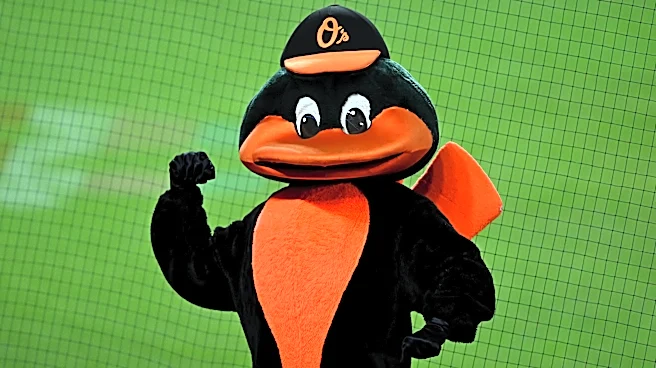
In 1936, investment banker Donald Lee Barnes purchased the team, with Cardinals treasurer Bill DeWitt, Barnes' son-in-law, buying a minority stake and becoming general manager. Barnes attempted to finance the purchase by selling 20,000 shares of stock to the public, an unusual practice for a sports franchise. Despite these efforts, the Browns continued to struggle, recording their worst franchise history mark of 43–111 in 1939. The team's final years in St. Louis were marked by continued poor performance and declining attendance, culminating in their relocation to Baltimore after the 1953 season, where they became the Baltimore Orioles.