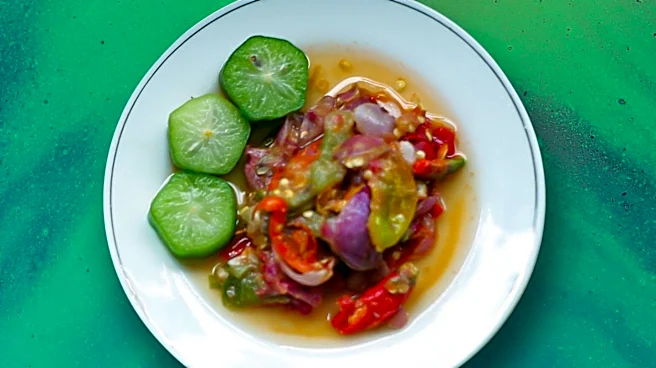








Ceviche, a traditional cold dish of raw fish or shellfish marinated in citrus and seasonings, holds a significant place in the culinary cultures of various Latin American countries along the Pacific Ocean. While many nations consider their iteration native, ceviche is most notably recognized as the national dish of Peru. Its journey from ancient preparations to a globally celebrated dish is a testament to culinary evolution and cultural fusion. UNESCO
has even acknowledged ceviche as an expression of Peruvian traditional cuisine and an Intangible Cultural Heritage of Humanity, highlighting its deep historical and cultural roots.
Pre-Hispanic Origins and Proto-Ceviche
Before the arrival of Europeans, ancient civilizations along the Pacific coast of South America practiced a form of what is now referred to as "Proto-Ceviche." This term describes the historical predecessor to the modern dish, relying on local acids and preservatives long before citrus fruits were introduced to the Andean region. Peruvian researchers and archaeological evidence strongly support a pre-Hispanic origin within these coastal civilizations.
For instance, the Caral civilization, which flourished in central Peru between 3500 BC and 1800 BC, has left evidence of consuming raw Peruvian anchovy with chili and sea salt, according to archaeologist Ruth Shady's investigations. Another theory suggests ceviche originated among the Moche, a coastal civilization that began nearly 2,000 years ago in what is now northern Peru. The Moche used the fermented juice from the local banana passionfruit, known as tumbo, as a marinating agent, predating the use of lime or lemon juice. Furthermore, recent investigations indicate that during the Inca Empire, fish was marinated with chicha, an Andean fermented corn beer. Historical chronicles also report that along the Incan coast before the arrival of Spaniards, fish was consumed with sea salt and ají (South American chili peppers), underscoring a long-standing tradition of consuming "acid-cooked" fish.
The Spanish Colonial Era and Culinary Fusion
The modern style of ceviche, recognized globally today, is a direct result of a significant culinary fusion that occurred during the Spanish colonial era in the 16th century. This period marked the combination of New World ingredients with Old World cooking techniques. Historians generally agree that the modern iteration of ceviche originated during colonial times in present-day Peru, largely due to the introduction of key ingredients like limes, onions, and vinegar by the Spanish.
The technique of macerating raw fish and meat in vinegar, citrus, and spices, known as escabeche, was brought to the Americas from Spain. This technique is linked to the Moorish heritage in Spanish cuisine. Peruvian chef Gastón Acurio further explains that Lima's dominant position as the capital of the Viceroyalty of Peru for four centuries, encompassing much of western South America, allowed popular dishes like ceviche to spread to other administrative provinces. Over time, these dishes became local cuisine, incorporating regional flavors and styles. The dish was initially popular in the Pacific coastal regions of western South America but has since gained immense popularity across Northern and Central America with the help of globalization.
Modern Evolution and Global Recognition
Traditional-style ceviche involved marinating fish for about three hours. However, modern-style ceviche, which gained popularity in the 1970s, typically features a much shorter marinating period. The appropriate fish can now be marinated in the time it takes to mix the ingredients, serve, and bring the ceviche to the table. This modern approach, similar to the method used in making Japanese sashimi, involves marinating fish for just a few minutes and serving it promptly. This particular style was developed by Peruvian-Japanese chefs, including Dario Matsufuji and Humberto Sato.
Ceviche's global popularity has grown significantly, leading to its recognition as a symbol of Peruvian cuisine. In Peru, ceviche has been declared part of the country's national heritage, and a holiday is celebrated in its honor every June 28th. The UNESCO recognition in December 2023 as an Intangible Cultural Heritage of Humanity further solidifies its cultural importance. This global appreciation has also contributed to a greater sense of pride in the national cuisine among Peruvians worldwide. The vast variety of ceviches offered in Peruvian marine cuisine exemplifies the gastronomic impact of cultural diversity, bringing together fishers, farmers, and chefs in its creation and evolution.
The Science of the Marinade
The preparation of ceviche relies on a citrus-based marinade, most commonly using lemons and limes. The citric acid in these fruits plays a crucial role beyond just adding flavor. It causes the proteins in the seafood to become denatured, a process that makes the dish appear cooked without the application of heat. This denaturation alters the protein structure, causing the flesh to turn opaque and firm, mimicking the look and texture of heat-cooked fish. However, it is important to note that while this process changes the appearance and texture, the seafood remains structurally raw. Acid marinades do not kill bacteria or parasitic worms in the same way that heat cooking does. Therefore, ceviche must be prepared fresh and consumed immediately to minimize the risk of food poisoning, emphasizing the importance of fresh ingredients and prompt consumption.