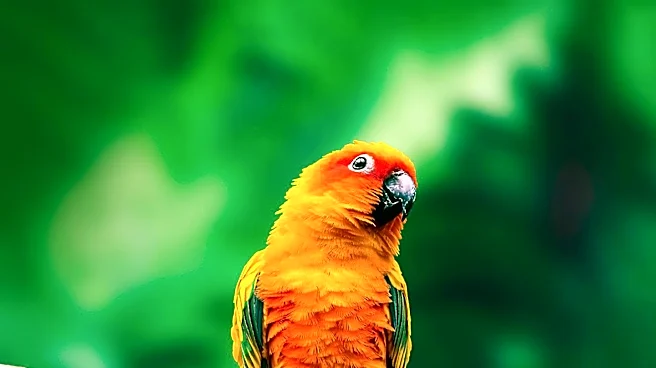








The sun conure, or sun parakeet, is a vibrant parrot species native to a specific region of northeastern South America. Its existence is deeply intertwined with the tropical environments it inhabits, showcasing complex social behaviors and a specialized diet that allows it to thrive. Understanding these aspects of its natural world is crucial, especially as the species faces significant challenges in its wild populations.
Geographic Distribution and Preferred Habitats
Sun conures are found in a relatively
small geographic area, primarily encompassing the north Brazilian state of Roraima, southern Guyana, extreme southern Suriname, and southern French Guiana. They are also occasionally seen as vagrants in coastal French Guiana. Their presence in Venezuela is less clear, though recent sightings have been reported from the southeast near Santa Elena de Uairén. While their occurrence in Amapá or far northern Pará remains unconfirmed due to poorly documented avifauna in those regions, it is known that populations along the Amazon River in Brazil previously attributed to sun conures are now recognized as belonging to the sulphur-breasted parakeet.
These parrots are predominantly found in tropical habitats, though their precise ecological requirements are not fully understood. They are widely reported to inhabit dry savanna woodlands and coastal forests. However, more recent observations suggest they primarily reside at altitudes below 3,900 feet (1,200 meters), particularly at the edges of humid forests growing in the foothills of the Guiana Shield. They appear to cross more open savannah habitats mainly when traveling between forest patches. Sun conures have also been observed in shrublands along the Amazon riverbank, as well as in forested valleys and coastal, seasonally flooded forests. They typically favor fruiting trees and palm groves for nesting and foraging.
Social Structure and Daily Life in the Wild
Sun conures are highly social birds, a characteristic shared with other members of the *Aratinga* genus. They typically live in large flocks, often comprising 15 to 30 individuals. This strong social bond means they rarely leave their flock. If separated, they use loud, high-pitched squawks and screams, which can carry for hundreds of yards, to communicate and find their way back to the group. While flocks are generally quiet during feeding, they become notably vocal and noisy when in flight, traveling many miles in a single day as fast, direct flyers.
Beyond vocalizations, sun conures engage in various physical displays for nonverbal communication. Throughout the day, birds within a flock can be observed resting, feeding one another, preening, and bathing. They are adept at moving through trees, using their beaks for additional support, and possess the remarkable ability to use their feet much like hands to hold, examine, or eat items. These birds are known to nest and roost in tree cavities. During their molting periods, when they can experience discomfort and irritability, bathing, warm rainfalls, and humidity help to ease the process by allowing the sheaths of their pin feathers to open more easily. Their intelligence and curiosity suggest a need for constant mental stimulation and social interaction, even in their wild environment.
Diverse Foraging and Reproductive Strategies
In the wild, the diet of sun conures is varied and includes fruits, flowers, berries, blossoms, seeds, nuts, and insects. They consume both ripe and half-ripe seeds from various fruits and berries, and have been observed eating red cactus fruit, Malpighia berries, and legume pods. Flocks near Karasabai have been noted feeding on monkey brush plants, where their colorful plumage provides natural camouflage against the red and yellow flowers. While they occasionally forage from agricultural crops, sometimes being considered pests, their diet adapts to their life cycle, requiring more protein during breeding, more carbohydrates when raising young, and increased calcium for egg production.
Reproduction involves monogamous pairing, typically forming around 4 to 5 months of age. Prior to breeding, pairs engage in mutual feeding and grooming. Mating is followed by affectionate behavior between the partners. Females' abdomens swell noticeably before egg-laying, and they nest in tree or palm cavities. Observations suggest cooperative breeding, with multiple adults, eggs, and young of various ages found in nests from January to October. Females incubate the clutch of three or four white eggs for 23 to 27 days, leaving only for brief feeding periods, while males aggressively defend the nest. Chicks are altricial, born blind and naked, opening their eyes and developing feather quills after about 10 days. Both parents feed the young, who remain dependent for 7 to 8 weeks and become independent after 9 to 10 weeks. Sun conures reach sexual maturity around 2 years of age and can live for 25 to 30 years.