




The Argentine Grand Prix, a cornerstone of South American motorsport, has a rich history defined not only by its legendary drivers but also by the diverse and often challenging circuits it has utilized. From its early days on temporary street courses to the purpose-built Autodromo 17 de Octubre, the evolution of the race tracks played a crucial role in shaping the competition and the experiences of both drivers and spectators. Each configuration presented
unique demands, influencing race strategies, overtaking opportunities, and the overall spectacle of the event. Understanding these circuit variations offers a deeper appreciation for the triumphs and tribulations faced by those who competed in this iconic race.
Early Venues and the Rise of Purpose-Built Racing
The Buenos Aires Grand Prix began its journey in 1930 on the Costanera circuit, a temporary track that hosted events until 1940. In 1941, the race briefly moved to the Retiro circuit. After a six-year interruption, racing resumed at Retiro in 1947, marking the start of the South American "Temporada" Grand Prix series. This period saw the race attracting a mix of Brazilian, European, and local Argentine drivers, including future legends like Juan Manuel Fangio. For the 1948 Grand Prix season, the event relocated to the Palermo circuit, where it remained until the end of 1950. The Costanera Norte circuit then hosted its final three Grand Prix events in 1951.
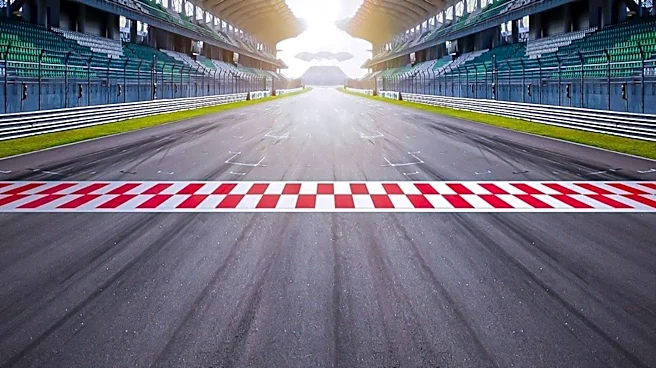
The landscape of Argentine motorsport was significantly transformed with the completion of the Autodromo 17 de Octubre in 1951. This facility, built on swampland just outside Buenos Aires and featuring a white archway dedicated to Admiral William Brown, was specifically designed for major Grand Prix series. It opened in March 1952 with the "Perón Cup," won by Juan Manuel Fangio, and in 1953, it hosted the first Formula One race in South America. This marked a shift from temporary street circuits to a dedicated, permanent racing venue, allowing for more sophisticated and challenging track designs.
The Autodromo's Diverse Configurations
The Autodromo 17 de Octubre was notable for offering four distinct configurations for Grand Prix racing, each with its own character. From 1953 to 1960, the "No. 2" layout was predominantly used, run clockwise in most years, with 1954 being an exception when it was run counterclockwise. This early configuration set the stage for some memorable races, including Fangio's consecutive victories. The 1953 race, despite its tragic accident due to overcrowding, underscored the immense public draw of the event, even on this initial layout.
Later, from 1971 to 1973, the "No. 9" configuration was adopted. This layout was largely similar to the "No. 2" but featured a shortened section after the Tobogan esses and a tighter, shorter Horquilla turn. This modification aimed to refine the racing experience. Following this, from 1974 to 1981, the Grand Prix utilized the "No. 15" configuration, which was the longest and fastest of the layouts. This variant combined two very fast successive right and left-hand corners with two long straights and a spectacular, wide third corner known as the Curvon Salotto, which led into the infield section from the previous "No. 9" configuration. The "No. 15" layout was particularly known for its 0.91 km (3,000 ft) long straight and a flat-out right-handed 180-degree corner, the Curvon, followed by a 1.2 km (4,000 ft) straight. Cars were flat-out for approximately 45 seconds through this lake loop, making overtaking a frequent occurrence.
The Challenging "No. 6" and Modern Adaptations
The final period of the Argentine Grand Prix, from 1995 to 1998, saw the race held on the twisty "No. 6" configuration. This layout exclusively used the infield section of the Autodromo and incorporated an S-shaped chicane named Los Mixos. This particular variant was met with significant criticism from Formula One drivers. They found it to be extremely tight and winding, with corners positioned very close together, which made overtaking exceptionally difficult. This feedback highlighted a contrast with other challenging but often more flowing circuits of the era.
Despite the criticisms of the "No. 6" layout, the modernized Argentine Grand Prix returned in 1995, following upgrades to the track by a private consortium that purchased it in 1991. The general layout was not drastically altered, but the addition of the Ayrton Senna chicane was a notable change. The financial difficulties faced by the event organizers ultimately led to the 1998 race being the last. However, the name "Buenos Aires Grand Prix" was revived in 2023 for the Argentine stock car racing championship Turismo Carretera, indicating that while the Formula One era at the Autodromo may have concluded, the spirit of motor racing continues to evolve and find new expressions in Argentina.