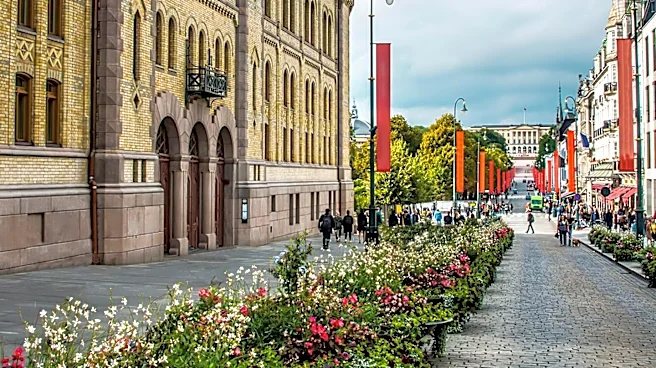






Oslo's Old Town, known as Gamlebyen, is a neighborhood steeped in history, offering a glimpse into the city's medieval past. As the oldest urban area within Norway's capital, it holds significant cultural and historical value. Established around the year 1000, the Old Town was the heart of Oslo until 1925, when the city was renamed Kristiania.
Medieval Origins
The origins of Oslo's Old Town date back to the end of the Viking Age, with archaeological evidence suggesting
an urban structure as early as the year 1000. King Harald Hardrada is credited with building the city in 1050, marking the beginning of Oslo's development as a significant urban center. By the end of the 11th century, Oslo had become a bishop's seat under King Olav Kyrre.
The medieval town flourished in the 1300s during the reign of Haakon V Magnusson, who ruled first as duke and then as king. This period marked the heyday of medieval Oslo, with the construction of notable structures such as St. Hallvard's Cathedral, named after St. Hallvard of Husaby.
Architectural Heritage
Oslo's Old Town is home to several medieval ruins, including stone and brick structures that lie above ground. These ruins are located in the area delineated by Hovin creek, Alna river, and Middelalderparken. The Franciscan Monastery, Akershus fortress, and the Cistercians' former monastery on Hovedøya are key historical sites that reflect the architectural heritage of the medieval town.
The core area of the Old Town also features 1700s buildings, adding to its historical charm. Towards Ekeberg slope, visitors can find 17th- and 18th-century wooden houses, which are zoned for conservation under the Planning and Building Act. These structures offer a window into Oslo's architectural evolution over the centuries.
Preserving History
Efforts to preserve Oslo's Old Town are evident in the conservation of its historical buildings and ruins. The area is protected under various cultural heritage laws, ensuring that its rich history is maintained for future generations. The Old Town's historical significance is further highlighted by its role as the site of Oslo's oldest market, located at the intersection of Oslogate and Bispegata.
Today, Oslo's Old Town serves as a testament to the city's medieval roots, offering residents and visitors a chance to explore its historical landmarks and architectural treasures. As a neighborhood that has witnessed centuries of change, it remains a vital part of Oslo's cultural identity.