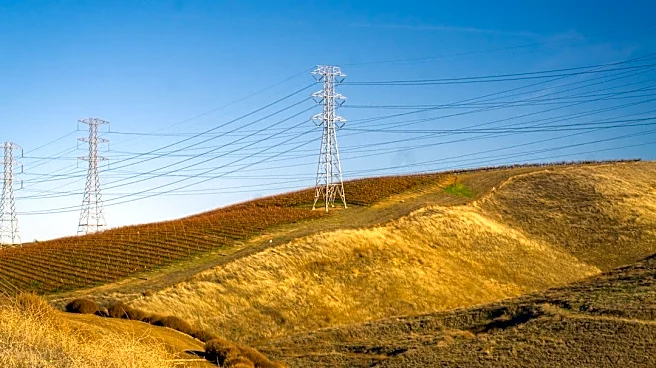







In 2019, California experienced a series of unprecedented precautionary power outages, officially termed Public Safety Power Shutoff (PSPS) events. These deliberate shutoffs, implemented by major utility companies like Pacific Gas and Electric Company (PG&E), Southern California Edison (SCE), and San Diego Gas & Electric (SDG&E), aimed to prevent devastating wildfires. Occurring across approximately 30 counties in Northern California and several areas
in Southern California from October 9 to November 1, 2019, and again on November 20, 2019, these actions were a direct response to the heightened risk of wildfires fueled by strong winds and dry conditions. The strategy involved de-energizing power lines to avoid ignitions that could lead to large-scale blazes, a measure that proved to be a critical, albeit controversial, tool in the state's wildfire management efforts.
The Rationale Behind PSPS Events
The decision to implement PSPS events was rooted in the increasing threat of wildfires, particularly those sparked by electrical infrastructure. California's growing population in suburban and exurban areas, often bordering wilderness, has escalated both the risk and potential size of fires. Over a third of the state's housing is now located in what is known as the wildland–urban interface, where fires can become more dangerous and spread rapidly from structure to structure, creating "fast-moving urban conflagrations" that are difficult for firefighters to control. This context, combined with the legal doctrine of inverse condemnation, which holds utilities responsible for wildfire destruction regardless of negligence, pushed utility companies to adopt more aggressive preventative measures. PG&E, for instance, faced $30 billion in liability from the 2017 and 2018 fires, which ultimately led to bankruptcy proceedings. The PSPS events were a direct attempt to reduce these risks and liabilities by proactively removing a potential ignition source during high-risk weather conditions.
Immediate Impact and Averted Disasters
The immediate aftermath of the early October 2019 power shutoffs provided early indications of their effectiveness. PG&E's CEO reported finding over 100 cases of "wind-related damage" across the 25,000 miles of de-energized power lines. This damage, had the lines remained energized, could have potentially sparked numerous fires. By the end of October, PG&E officials informed a federal judge that the power shutoffs had helped prevent up to 56 wildfires, with 44 attributed to contact with vegetation and 12 to wind-caused equipment damage. This suggests that the proactive measure successfully mitigated a significant number of potential fire ignitions during a period of extreme risk.
Post-Event Risk Analysis and Long-Term Implications
Further validation of the PSPS strategy came in March 2021, when the California Public Utilities Commission (CPUC) presented a risk analysis study conducted by Technosylva. This study estimated the potential fire impacts if electric infrastructure had remained energized during the October 2019 PSPS events. For PG&E, the analysis indicated that 662 damage incidents would have occurred, with 560 expected to ignite fires. One specific incident modeled for October 9 showed a potential fire growing to approximately 23,500 acres, impacting over 2,000 buildings and more than 3,300 people. This hypothetical fire was near the location of the 2018 Carr Fire, which burned over 219,000 acres. Similarly, SDG&E's analysis for two October 2019 PSPS events revealed 15 damage incidents, all expected to ignite fires, potentially burning over 327,000 acres and impacting 34,000 people and 35,000 structures. SCE's analysis for five September–October 2019 PSPS events identified 64 damage incidents, with 55 expected to ignite fires. One SCE incident on September 16 could have resulted in a fire of approximately 15,425 acres, impacting over 2,600 buildings and 7,500 people. These findings underscore the significant role PSPS events played in preventing widespread destruction and highlight the ongoing challenge of balancing public safety with reliable power delivery in California's fire-prone regions.