



The National Football League (NFL) as we know it today is a product of significant historical mergers and the absorption of innovations from rival leagues. While the NFL was established in 1920, its path to becoming a 32-team powerhouse and a cultural phenomenon was not linear. The competition and eventual integration with other professional football organizations, particularly the All-America Football Conference (AAFC) and the American Football League (AFL),
played a crucial role in shaping the league's structure, rules, and overall appeal.
The Influence of the All-America Football Conference
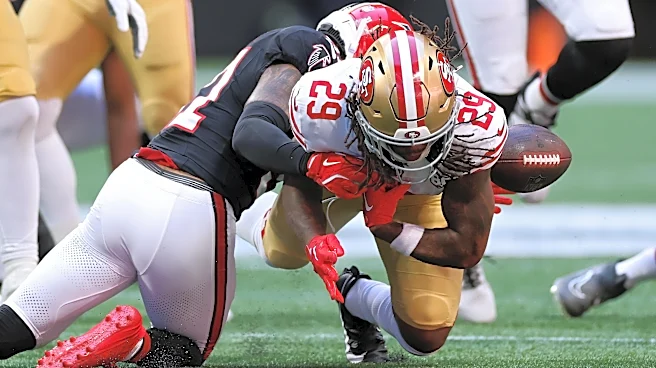
The All-America Football Conference (AAFC) operated from 1946 to 1949, presenting a significant challenge to the established NFL. Although the AAFC eventually folded, its impact on the NFL was profound. In 1950, the NFL absorbed three key teams from the AAFC: the Cleveland Browns, the San Francisco 49ers, and a new Baltimore Colts franchise. The Cleveland Browns, in particular, were a dominant force in the AAFC, having won every championship during that league's existence. Their integration, along with the 49ers and Colts, brought new talent, fan bases, and competitive rivalries into the NFL, enriching the league's landscape.
This period also saw the NFL's growing relationship with television, which would become a cornerstone of its future success. In 1950, the Los Angeles Rams made history by becoming the first team to televise its entire schedule. This pioneering move highlighted the potential for professional football to reach a broader audience and laid the groundwork for the sport's eventual dominance in televised sports. The absorption of AAFC teams and the embrace of television were early indicators of the NFL's strategic approach to growth and modernization.
The AFL-NFL Rivalry and Historic Merger
The most transformative rivalry and merger in NFL history occurred with the American Football League (AFL), which began play in 1960. The AFL quickly established itself as a formidable competitor, leading to a "bidding war" for players and a period of intense competition between the two leagues. This rivalry culminated in a historic merger agreement announced on June 8, 1966, which became fully effective in 1970. A crucial aspect of this merger was the approval by Congress of a law that granted antitrust immunity to the combined leagues, with assurances that no city would lose its franchise.
The merger led to the creation of the AFL-NFL Championship Game, later famously known as the Super Bowl. The first of these inter-league championship games, Super Bowl I, saw the NFL's Green Bay Packers defeat the AFL's Kansas City Chiefs. The Super Bowl quickly grew in prominence, evolving into a major cultural and commercial event in the United States. The AFL's influence extended beyond just the merger; the NFL eventually adopted many of the AFL's innovations, including the on-field game clock, names on player jerseys, recruiting at small and predominantly Black colleges, gate and television revenue-sharing, the establishment of southern franchises, and more wide-open offensive rules. These adoptions modernized the game and contributed significantly to the NFL's widespread appeal and growth to its current 32-team membership.