




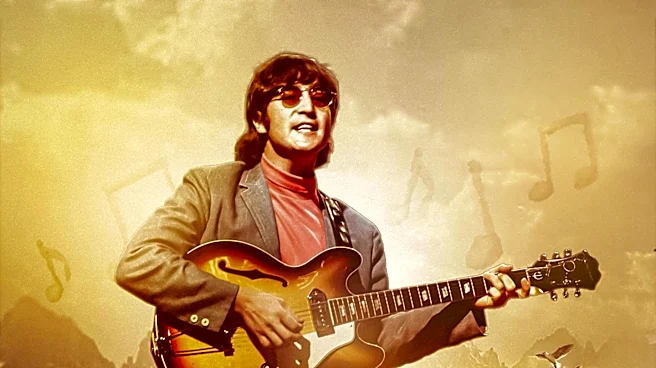

John Lennon's "Imagine" stands as a monumental achievement in his solo career, not only as his best-selling single but also as a song that has profoundly influenced global culture. From its composition to its widespread adoption in various media and by numerous artists, "Imagine" has carved out a unique space in music history. Its journey from a newly released track to a universally recognized anthem involves both immense popularity and ongoing discussions
about its lyrical content and meaning.
Compositional Roots and Early Recognition
The song "Imagine" quickly garnered significant attention upon its release, establishing itself as a powerful and memorable piece. Its impact was immediate and far-reaching, leading to considerable commercial success. It has sold over 1.7 million copies in the UK, a testament to its initial and sustained popularity. Beyond sales, the song's artistic merit was recognized early on, setting the stage for its future as a cultural touchstone. The Recording Industry Association of America, for instance, included "Imagine" on its list of the 365 Songs of the Century, acknowledging its historical significance.
Listeners and critics alike have consistently praised "Imagine" for its message and musicality. In 2005, the Canadian Broadcasting Corporation's listeners voted it the greatest song in the past 100 years on the show "50 Tracks." This public recognition highlights the song's ability to connect deeply with individuals. Similarly, a UK favorite song survey conducted by Virgin Radio in December 2005 saw listeners vote "Imagine" as number one. These early accolades underscore the song's immediate and profound resonance with audiences across different regions.
Artistic Interpretations and Global Stage Presence
The enduring appeal of "Imagine" is further demonstrated by the sheer number of artists who have performed or covered it. More than 200 musicians, including iconic figures such as Madonna, Stevie Wonder, Joan Baez, Lady Gaga, David Bowie, Elton John, and Diana Ross, have offered their interpretations of the song. This extensive list of covers speaks to the song's adaptability and its universal themes that transcend genre and artistic style. Each new rendition introduces "Imagine" to different audiences, ensuring its continued relevance.
"Imagine" has also become a staple at major international events, serving as a powerful symbol of unity and peace. It was featured as a theme song in the opening ceremony of the 2022 Winter Olympics. Before that, a pre-recorded version, arranged by Hans Zimmer and performed by a diverse group of artists including John Legend, Keith Urban, Alejandro Sanz, and Angélique Kidjo, was part of the opening ceremony for the 2020 Summer Olympics in Tokyo in July 2021. These high-profile appearances on global stages underscore the song's capacity to convey a message of hope and collective aspiration to a worldwide audience.
Controversies and Evolving Meanings
Despite its widespread acclaim and use in celebratory contexts, "Imagine" has been a source of controversy since its initial release. The lyrics, which envision a world without traditional concepts of religion, nationality, or possessions, have often sparked debate. This controversial aspect has not, however, diminished its impact; instead, it has contributed to ongoing discussions about its meaning and implications. The song's ability to provoke thought and discussion is a key part of its lasting legacy.
In a notable recent event, during the 2022 Russian invasion of Ukraine, John Lennon's son, Julian Lennon, performed "Imagine" for the first time. He explicitly linked his performance to the ongoing crisis, calling on world leaders and all who believe in the song's message of hope and peace to stand up for refugees. This act demonstrates how "Imagine" continues to be reinterpreted and utilized in contemporary global contexts, adapting its message to address current humanitarian and political challenges, and proving its timeless capacity to inspire action and reflection.