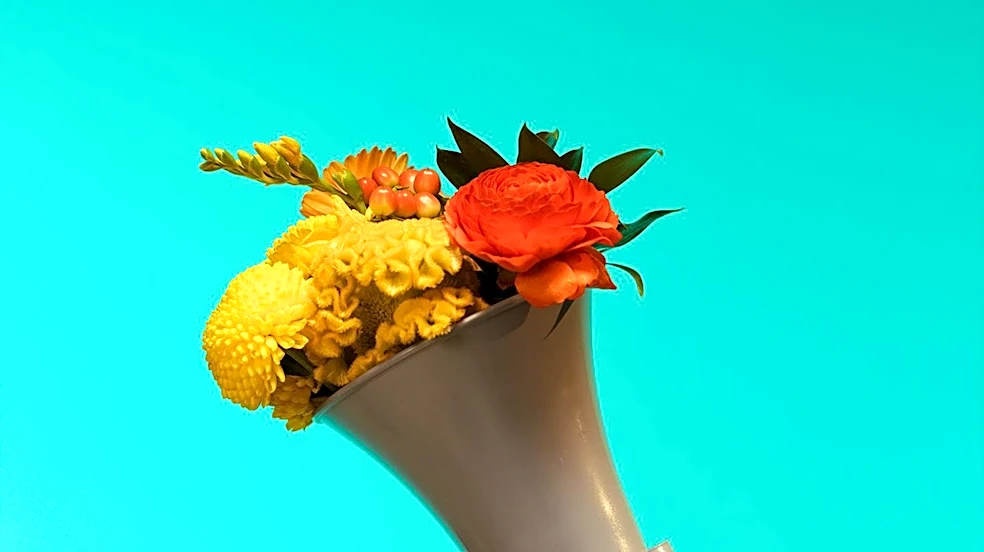

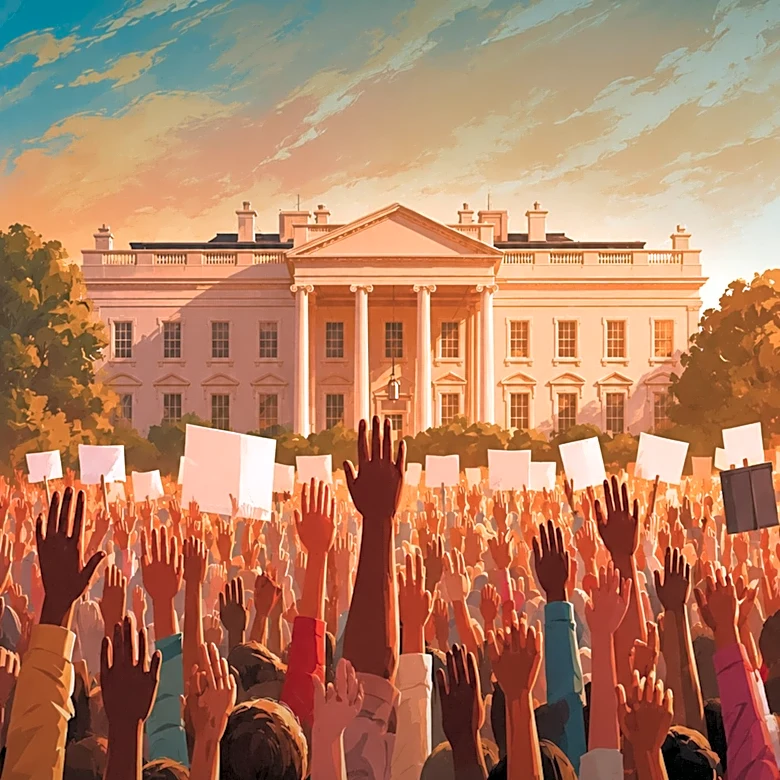

The 1967 March on the Pentagon, a significant anti-Vietnam War demonstration, became an iconic event not only for its scale but also for the powerful symbolism of the "Flower Power" movement. This concept, originating in Berkeley, California, as a symbolic protest action, aimed to transform anti-war rallies into a form of street theater. The idea was to reduce the inherent fear, anger, and threat associated with protests by using props like flowers,
toys, flags, candy, and music. This approach was notably advocated by poet Allen Ginsberg in a November 1965 essay, "How to Make a March/Spectacle," where he suggested providing protesters with "masses of flowers" to distribute to police, press, politicians, and spectators. The use of flowers was particularly intended to counter the intimidating presence of groups like the Hells Angels motorcycle gang, who supported the war and had threatened anti-war demonstrations.
By late 1966, the "Flower Power" method of guerrilla theater had spread beyond California. Groups like the Bread and Puppet Theater in New York City incorporated it into their protests, handing out balloons and flowers with anti-war literature. The magazine *Workshop in Nonviolence* (WIN), published by New York activists, also encouraged the use of "Flower Power." This movement culminated in some of its most memorable expressions during the March on the Pentagon, creating enduring images that captured the spirit of the 1960s counterculture.
Iconic Images of Confrontation and Peace
During the October 1967 March on the Pentagon, organizers Abbie Hoffman and Jerry Rubin actively utilized "Flower Power" concepts to create a theatrical spectacle. Their plan even included a call for marchers to attempt to "levitate" the Pentagon. When the thousands of anti-war demonstrators confronted over 2,500 U.S. Army National Guard troops forming a human barricade, some protesters held out flowers, and a few even placed them into the barrels of the soldiers' rifles. These moments of peaceful defiance against armed force became some of the most enduring images of the era.
Two photographs, in particular, captured this powerful juxtaposition. One, titled "The Ultimate Confrontation" by French photojournalist Marc Riboud, depicted Jan Rose Kasmir, a 17-year-old high school student, holding a chrysanthemum and gazing at bayonet-wielding soldiers. *Smithsonian Magazine* described this widely published photo as "a gauzy juxtaposition of armed force and flower child innocence." Another photograph, simply titled "Flower Power" by *Washington Star* photographer Bernie Boston, was nominated for the 1967 Pulitzer Prize. This image shows a young man in a turtleneck sweater placing carnations into the rifle barrels of military policemen. The young man is most commonly identified as George Edgerly Harris III, an 18-year-old actor from New York who later performed under the stage name Hibiscus. However, writer and activist Paul Krassner identified the young man as Yippie organizer "Super-Joel" Tornabene. Boston's editor at *The Washington Evening Star* initially underestimated the photo's significance, running it on an inside page, but it later gained recognition through photography competitions.
The Evolution and Legacy of Flower Power
The term "Flower Power" itself has roots in the mid-1960s. In 1965, Sky Saxon of the Californian rock band The Seeds began using the term "flower rock" to describe their music, with their manager DJ Lord Tim Hudson claiming to have coined "flower power" and "flower child." Hudson encouraged the band to write songs like "March of the Flower Children" for their 1967 album *Future*, asserting that "Seed music is the original Flower Power music." By December 1967, English journalist Peter Fryer's glossary of hippie slang, "A to Z of Zowie," defined "flower power" as a "revolutionary philosophy akin to ideas of Young Liberals, e.g. Make Love Not War. Characteristic: bell." Writer Skip Stone's 1999 book *Hippies from A to Z* further elaborated, stating that "Flower Power was the hippie equivalent of the Black Power movement. An extension of the Peace and Love theme, Flower Power assumed that the power of Love would win out over violence and hate."
Despite its powerful imagery and cultural impact, the "Flower Power" anti-war movement began to fade by the early 1970s. This decline was primarily due to the end of the military draft in 1972 and the commencement of American withdrawal from combat activities in Vietnam in January 1973. However, its legacy as a symbol of peaceful resistance and counterculture endures. Even John Lennon, an outspoken critic of the war, acknowledged its impact. At a rally in December 1971 for political activist John Sinclair, who had been sentenced to 10 years for marijuana possession, Lennon remarked, "OK so Flower Power didn't work. So what. We start again." This statement reflects the movement's enduring spirit, even as its direct influence waned, leaving behind a visual and philosophical imprint on the history of protest.