
Rowing, a sport that involves propelling a boat using oars, has a rich history that dates back to ancient civilizations. This article explores the evolution of rowing, tracing its origins from ancient Egypt
and Greece to its modern form as a competitive sport. By examining key historical milestones, we can appreciate how rowing has developed over the centuries and its significance in various cultures.
Ancient Beginnings
The origins of rowing can be traced back to ancient Egypt, where it was used as a means of transportation and in ceremonial contexts. Archaeologists have discovered models of rowing vessels in Egyptian tombs, dating back to the 18th and 19th centuries BC. These early boats were designed to navigate the shallow rivers of Mesopotamia, such as the Euphrates and Tigris, which were crucial for trade and communication in the region.
In ancient Greece, rowing became an essential part of naval warfare and trade. The Greeks, particularly the Athenians, were known for their powerful fleets of oared galleys. Rowing was considered an honorable profession, and the trireme, a type of galley with three rows of oars, became a symbol of Greek naval dominance. The use of leather cushions allowed rowers to slide over their seats, utilizing leg strength similar to modern rowing techniques.
Rowing in Northern Europe
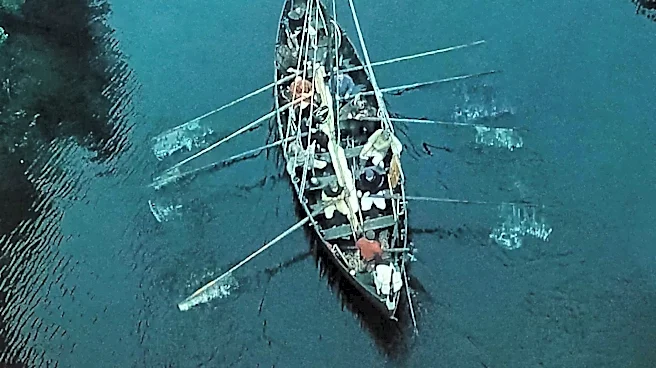
Rowing made its way to Northern Europe between 500 BC and 1 AD, influenced by the Roman conquest of Northern Gaul. During the Viking Age, from 500 to 1100 AD, combined sailing and rowing vessels dominated trade and warfare in the region. The Vikings were known for their longships, which were capable of both rowing and sailing, allowing them to navigate the challenging waters of Northern Europe.
As time progressed, rowing continued to be an important mode of transportation and a means of conducting trade. The development of rowing techniques and boat designs evolved to meet the demands of different environments and purposes, from the calm waters of rivers to the open seas.
Modern Developments
The modern sport of rowing began to take shape in the 18th and 19th centuries, with the establishment of organized competitions and the standardization of rules. The first modern-day rowing competition took place in 1715, and the sport has since grown in popularity worldwide.
Rowing became an Olympic sport in 1900, with men's events included in the program. Women's rowing was added to the Olympics in 1976, further expanding the sport's reach and inclusivity. Today, rowing is governed by the World Rowing Federation, which oversees international competitions and ensures the sport's continued growth and development.
The evolution of rowing from ancient times to the present day highlights its enduring appeal and adaptability. As a sport that combines physical strength, endurance, and teamwork, rowing continues to captivate athletes and spectators alike, maintaining its place as a cherished tradition across cultures and generations.