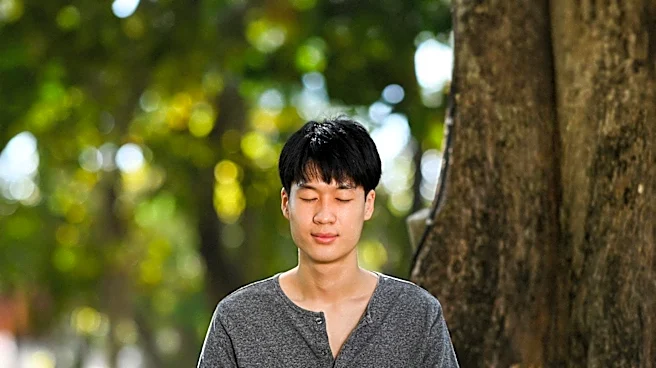

Spiritual retreats, a practice involving time spent away from normal life for reflection and deeper connection, have a rich and varied history across numerous religious communities. While the core purpose
often remains similar—to foster spiritual growth and insight—the forms and specific practices associated with retreats differ significantly. From ancient Buddhist traditions to Christian and Sufi practices, these periods of seclusion or communal experience have evolved, adapting to cultural contexts and spiritual needs while maintaining their fundamental role in deepening faith and self-awareness.
Buddhist Meditative Retreats: From Ancient Vassa to Modern Dzogchen
In Buddhism, meditative retreats are considered an intimate way to deepen concentration and insight. This practice dates back to the founder of Buddhism, Gautama Buddha, who established the Vassa, or rainy season retreat, as a common practice. In Zen Buddhism, these retreats are known as sesshin. Buddhist retreats can be undertaken either in solitude or as a community experience, with some held in silence and others allowing for conversation, depending on the host facility's practices and the participants' understanding.These retreats are frequently conducted in rural or remote locations, either privately or at a dedicated retreat center, such as a monastery. For advanced practitioners, some retreats may even involve darkness, a form common in the Nyingma school of Tibetan Buddhism as an advanced Dzogchen practice. The emphasis on reflection, prayer, or meditation is considered essential in Buddhism, highlighting the practice's role in spiritual development and the pursuit of enlightenment.
Christian Retreats: From Ignatian Exercises to Modern Movements
The Christian retreat, defined as a specific period away from daily life for prayer and reconnection with God, has roots almost as old as Christianity itself, seen in practices like the Desert Fathers' solitude. However, the modern form of Christian retreats was largely established by St. Ignatius of Loyola (1491–1556) through his Spiritual Exercises in the 1520s. Ignatius, later made the patron saint of spiritual retreats by Pope Pius XI in 1922, popularized this structured approach.Initially, retreats were not widely considered suitable for women. However, in 1674, Catherine de Francheville, supported by Jesuit Vincent Huby, founded a retreat house for women in Vannes. This initiative led to a community of laywomen and the establishment of daughter houses, eventually evolving into the religious Congregation of nuns known as La Retraite in the 19th century. Their active involvement in retreats, though curtailed later, saw a resurgence after the Second Vatican Council, expanding their community globally. In the 20th century, the Cursillo movement in Spain further popularized similar three-day retreats, influencing both licensed and independent programs.
Spiritual retreats are also common in Evangelical Lutheranism, with monasteries and convents offering them, such as Östanbäck Monastery, which hosts retreats and daily Mass. In the United States, The Congregation of the Servants of Christ at Saint Augustine's House provides opportunities for Christian pilgrimage, attracting thousands of visitors annually. Anglicanism saw the introduction of spiritual retreats in 1856 by Anglo-Catholic priests, initially for clergy and then for laity, typically lasting five days. The Oxford Movement further spread this practice, often featuring silence and prayer over three to four days. By the late 19th and early 20th centuries, retreats became more accessible to the working classes, becoming less ascetic and including more conversation and leisure, usually lasting one to three days.
Sufi Khalwa: Seclusion for Divine Connection
In Sufism, the mystical path of Islam, meditative retreats are an important practice known as khalwa, meaning seclusion or separation. However, in Sufi terminology, khalwa refers to the act of self-abandonment in desire for the Divine Presence. During complete seclusion, the Sufi continuously repeats the name of God as the highest form of remembrance. Ibn Arabi's book, *Journey to the Lord of Power* (Risālat al-Anwār), published over 700 years ago, serves as a guide to the inner journey experienced during khalwa.The practice of khalwa is based on the forty days Allah appointed for Musa (Moses) as a fasting period before speaking to him, as mentioned in the Qur'an. Sufis undertake khalwa with the permission and supervision of a Sufi authority. Ibn Arabi suggested that a Sufi should shut their door against the world for forty days and occupy themselves with the remembrance of Allah. This practice, he explained, would lead to the unveiling of various