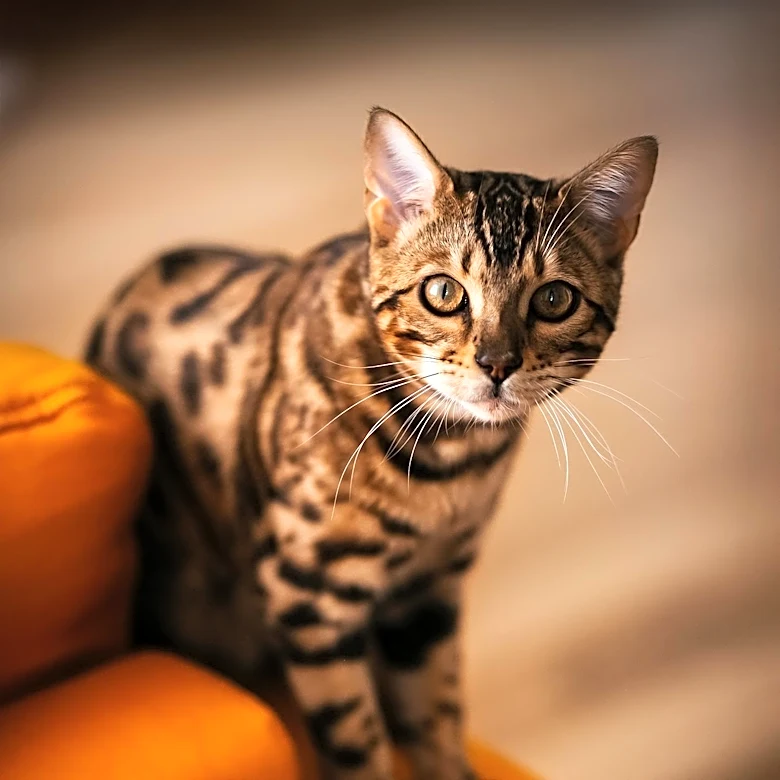



The Siamese cat, one of the earliest distinctly recognized breeds of domestic cat, has played a pivotal role in the creation and development of numerous other feline breeds. Originating from the Wichianmat landrace in Thailand, formerly known as Siam, the Siamese is celebrated for its distinctive colorpoint coat, blue almond-shaped eyes, and slender, muscular body. Beyond its own unique beauty, the Siamese has served as a crucial genetic foundation,
contributing its characteristic traits to a wide array of new cat breeds, thereby expanding the diversity of the feline world.
Expanding Coat Patterns: The Oriental and Colorpoint Shorthair
One significant area where the Siamese cat's genetic influence is evident is in the development of breeds designed to expand the range of coat patterns. The Oriental and Colorpoint Shorthair breeds are prime examples of this. These breeds were specifically developed through crossbreeding with Siamese cats to introduce and diversify coat patterns beyond the traditional Siamese point coloration. The Oriental Shorthair, for instance, retains the elegant body type and personality of the Siamese but comes in a vast array of colors and patterns across its short coat.
The Colorpoint Shorthair, on the other hand, is essentially a Siamese with a broader palette of point colors than the original four (seal, chocolate, blue, and lilac). By introducing other breeds into the Siamese lineage and then breeding back to Siamese, breeders were able to create cats that maintained the Siamese body and head type but displayed points in colors like red, cream, and tortie. This expansion of color options, while retaining the core Siamese characteristics, demonstrates the versatility of the Siamese as a foundational breed.
Long-Haired Variants: Himalayan and Balinese
The Siamese cat's genetic material has also been instrumental in creating long-haired versions of its own lineage and entirely new long-haired breeds. The Himalayan cat is a prominent example, resulting from the crossbreeding of Siamese cats with Persians. This cross aimed to combine the long, luxurious coat of the Persian with the striking colorpoint pattern and blue eyes of the Siamese. The outcome is a breed that possesses the elegance of a Persian but with the distinctive coloration of a Siamese, often referred to in Europe as Colorpoint Persians.
Similarly, the long-haired Siamese itself is internationally recognized as the Balinese. This breed is essentially a Siamese with a longer, silkier coat, believed to have originated from spontaneous mutations within Siamese litters or through deliberate breeding programs. The Balinese retains the Siamese's elegant body, striking blue eyes, and vocal nature, but with the added beauty of a flowing tail plume and a semi-long coat. Both the Himalayan and Balinese showcase how the Siamese's genetic blueprint can be adapted to produce stunning long-haired variants.
Introducing Siamese Features to Hair-Mutation Breeds
The influence of the Siamese extends even to breeds characterized by unique hair mutations. Crossbreeding with Siamese cats has introduced Siamese features into several such breeds, including the Cornish Rex, Sphynx, and Peterbald. For example, the Peterbald, a Russian breed known for its hairless or very short, downy coat, often exhibits the slender, elegant body type and the distinctive head shape that are hallmarks of the Siamese. Some Peterbalds also display the blue eyes and point coloration, further highlighting their Siamese heritage.
In the case of the Sphynx, while primarily known for its lack of fur, breeders have sometimes incorporated Siamese lines to refine body type or introduce specific color patterns that might be expressed on the skin. The Cornish Rex, with its unique curly coat, has also seen the introduction of Siamese genetics to enhance certain physical traits or to bring in the point coloration. These examples illustrate the profound and widespread impact of the Siamese cat, not just in creating new breeds, but also in enriching the genetic diversity and aesthetic appeal of existing ones across the feline spectrum.