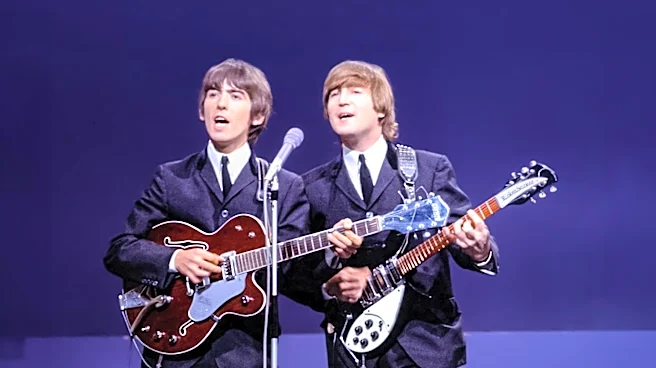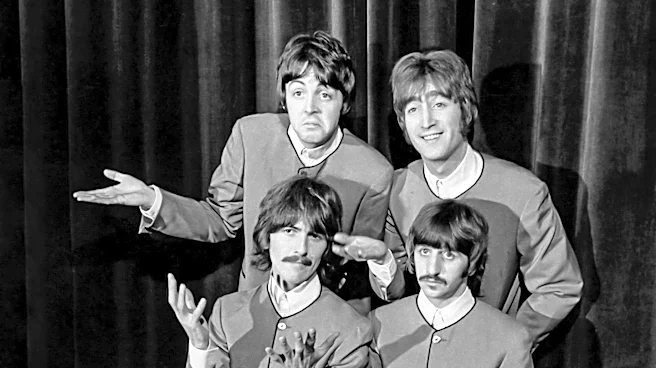




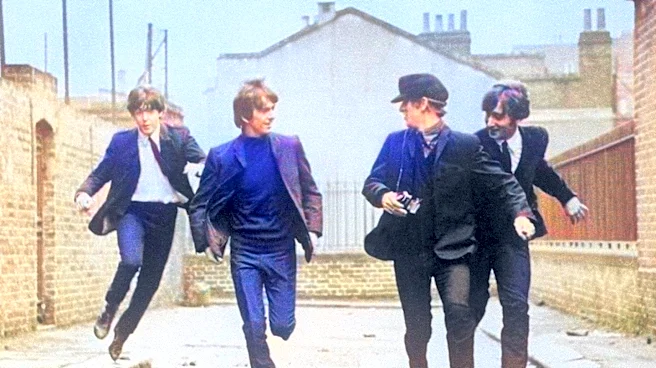
Following the official breakup of The Beatles in April 1970, the individual members—John Lennon, Paul McCartney, George Harrison, and Ringo Starr—each embarked on successful solo careers. While the dream of a full reunion of all four members remained largely unfulfilled during their lifetimes, the 1970s saw various partial collaborations and attempted reconciliations that offer a glimpse into their evolving relationships and musical paths. These interactions,
often fraught with personal and business complexities, underscore the enduring bond and the lingering tensions that characterized the post-Beatles era.
Early Solo Paths and Divergent Preferences
In the immediate aftermath of the breakup, the former bandmates pursued distinct musical directions. In a 1971 interview, Lennon expressed skepticism about working with McCartney again, suggesting it might only happen "a year or two after all the money thing's settled." However, he remained open to collaborating with Harrison and Starr, who frequently performed on each other's records and separately on Lennon's. McCartney, on the other hand, consciously avoided the pool of session musicians favored by his former bandmates. He felt that using the same musicians, such as Phil Spector or drummer Jim Keltner, was "a bit too predictable" and likened it to joining a "clique" he wished to avoid.
This period saw Harrison becoming the first member to release a solo album, *Wonderwall Music*, much of which was recorded in Bombay in January 1968, even before the official breakup. His growth as a composer, often overshadowed by Lennon and McCartney, became more apparent in his solo work. Starr also quickly established his solo career, often featuring contributions from his former bandmates, though rarely all together.
Concert for Bangladesh and *Ringo* Album
A notable instance of post-breakup collaboration occurred in 1971 when Harrison invited his former bandmates to perform at the Concert for Bangladesh in August. Starr accepted the invitation, but Lennon and McCartney did not. McCartney declined due to his wariness of Allen Klein potentially taking credit for organizing a Beatles reunion. Lennon agreed on the condition that Yoko Ono could also participate, but Harrison politely refused, stating that the concert was intended as an exclusive gathering of rock stars, not an avant-garde festival. The concert, while not a full Beatles reunion, garnered significant media attention for the ostensible reunion of Starr and Harrison.
In March 1973, a significant partial reunion took place when Harrison joined Lennon, Starr, and bassist Klaus Voormann for the recording of "I'm the Greatest," released on Starr's 1973 album *Ringo*. To Lennon's surprise, Harrison suggested forming a group with this lineup. Amidst the numerous financial and legal disputes plaguing the foursome, Lennon stated that talk of Beatles reunions often came from those on the periphery seeking to make money, and he was not interested in playing with the "old team again." However, he also acknowledged a chance of reuniting, believing that "nobody would mind doing some work together again," though he was sure it wouldn't be permanent. At Starr's request, McCartney also appeared on *Ringo* for the song "Six O'Clock," making it the only post-breakup album to feature compositions and performances by all four former Beatles, albeit on separate songs.
Missed Opportunities and Lingering Hopes
Later in 1973, McCartney attempted to organize a reunion as a means of mitigating their collective legal burdens. In February 1974, reports circulated that The Beatles would soon reform, and although all four members were present in Los Angeles the following month, they chose not to meet. During the promotion for his December album *Dark Horse*, Harrison remarked that putting The Beatles back together was "all a fantasy," suggesting it would only happen if everyone was broke. He also candidly stated, "Having played with other musicians, I don't think The Beatles were that good... I'd join a band with John Lennon any day, but I couldn't join a band with Paul. That's not personal, but from a musical point of view."
Despite these sentiments, with their business quarrels settled in early 1975, Lennon found himself keen to approach songwriting with McCartney again. Linda McCartney confirmed that her husband was "desperate to write with John again" and invited Lennon to a recording session in New Orleans. However, a phone call from Yoko Ono to Lennon, who was then separated from her and in a relationship with May Pang, led to Lennon returning to Ono. Pang recalled Lennon's changed demeanor towards McCartney after that call, saying, "He was a different person about Paul. It wasn't the same." Lennon later told Derek Taylor that Linda was repeatedly suggesting he work with McCartney, but he couldn't "really see it myself." The closest to a full reunion in the 1970s occurred on May 19, 1979, when McCartney, Harrison, and Starr performed at Pattie Boyd and Eric Clapton's wedding reception, marking the first time at least three former Beatles performed live together since 1969. Boyd later expressed regret that Lennon, who she heard would have attended if he had known, never joined them, and the opportunity for all four to perform together was lost forever.