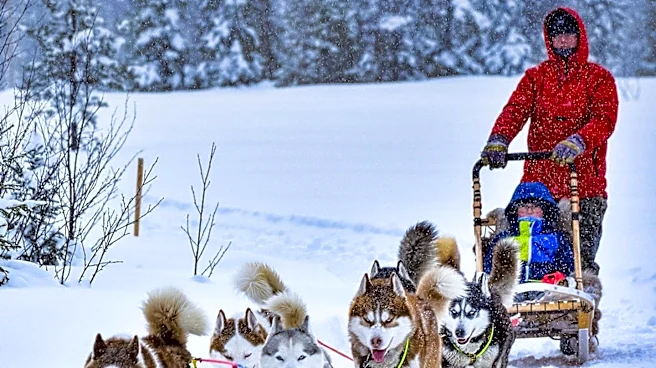








Dog sleds, vehicles pulled by one or more sled dogs over ice and snow, represent a practice known as mushing that has been integral to human survival and travel for over 9,000 years. These remarkable conveyances have evolved in design and function across various cultures and environments, from the Arctic expanses of Greenland to the vast plains of Siberia. Far from being mere historical artifacts, dog sleds remain vital tools for remote communities,
embodying a rich tradition of ingenuity and adaptation to some of the planet's harshest conditions. Their diverse forms reflect the specific needs, available resources, and cultural practices of the people who relied on them.
Ancient Origins and Regional Variations
The use of dog power for hunting and travel dates back millennia, establishing dog sledding as an ancient tradition. This practice continues to be crucial for remote settlements like Qaanaaq and Ittoqqortoormiit in Greenland, where sea ice surrounds these areas for nine months of the year. In these communities, mushing is a skill passed down through generations, and sled dogs are indispensable companions for hunting and fishing, essential for survival in challenging environments.
Historically, the method of hitching dogs varied regionally. In Greenland and the eastern Canadian Arctic, Inuit peoples traditionally arranged dogs in a fan shape in front of the sled. Conversely, in regions such as Alaska and the western part of Northern Canada, dogs were typically harnessed to pull side by side in pairs. These distinct arrangements highlight early adaptations to different terrains and travel needs, showcasing the practical evolution of dog sledding techniques.
Diverse Designs: Built-Up vs. Low Sleds
Dog sleds exhibit a wide array of shapes, sizes, and designs, often unique to specific regions to best suit cultural traditions, local terrain, climate, and available materials. Generally, dog sleds can be categorized into two primary types: the built-up sled and the low sled. Many anthropologists and archaeologists consider the low sled to be a more traditional design, predominantly used across parts of Siberia, Greenland, and Canada for transporting heavy loads such as carcasses, dried skins, or camp gear over ice or land.
In contrast, the built-up sled, characterized by a high rail on each side, was typically employed for carrying lighter items like clothing. This design is primarily associated with dog sledding in Alaska and Siberia. Both types of sleds share a common construction method: lashing, which involves securing structural parts together through binding holes, historically made from materials like baleen or seal skin. This lashing technique speaks to the resourcefulness of early sled builders, utilizing natural materials for durable construction.
Construction and Materials: Ingenuity in Harsh Environments
Despite regional variations in appearance and materials, cross pieces—also known as crossbars or cross beams—are a universal feature in all sleds. These components join two parallel runners and are evenly spaced from the back to the front, providing structural integrity. Sled runners, attached underneath the entire edge of the sled either by lashing or nails, are crucial for smooth travel. Traditionally, runners were coated with ice or a mixture of water, mud, or snow to reduce friction, though modern sleds may use iron and nylon for this purpose.
Traditional sleds were crafted from readily available materials such as driftwood and fragments of whale jaws. For instance, the Itelmens used dog sleds featuring two pairs of curved stanchions and a saddle-shaped seat, often crafted from birch wood or bone and fastened with twisted lashings. The Chukchi utilized driftwood from American pine or oak, with whalebone commonly serving as material for runners. These material choices underscore the deep connection between sled design and the local environment, where every available resource was ingeniously repurposed for functionality.
Specialized Sleds: Nartas, Qamutiiks, and Greenlandic Adaptations
Specific traditional sled designs highlight regional ingenuity. The