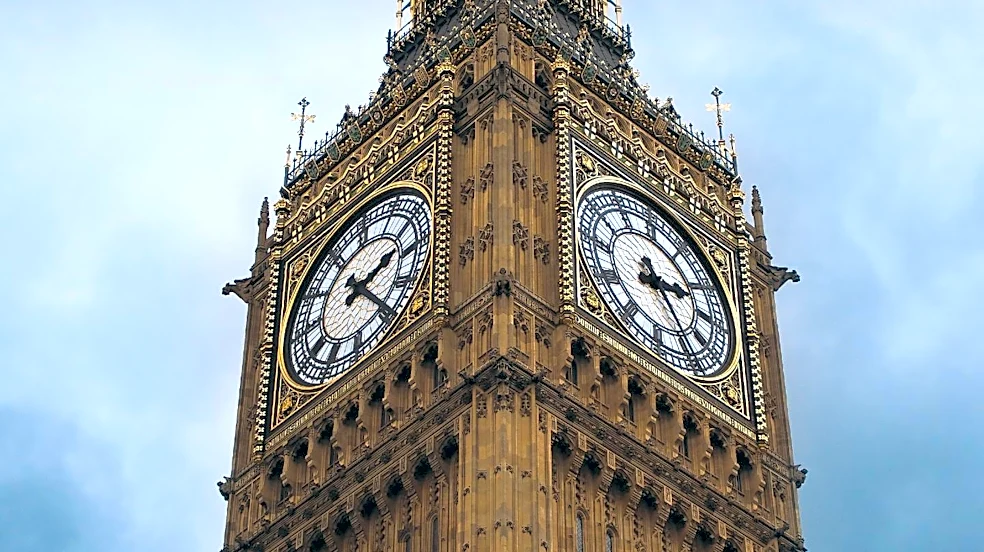









The structure popularly known as Big Ben, officially the Elizabeth Tower, has a rich history marked by its construction, significant renaming, and ongoing conservation efforts. Originally named the Clock Tower, it was built as an integral part of Charles Barry's design for a new Palace of Westminster, following a devastating fire that largely destroyed the old palace in 1834. While Barry was the chief architect, Augustus Pugin was responsible for the design of the Clock Tower, drawing
inspiration from his earlier works. Construction commenced on September 28, 1843, with Thomas Grissell and Morton Peto as the building contractors. An inscribed trowel in the Parliamentary Archives records that Emily, sister of Peto's daughter-in-law, laid the first stone, marking the beginning of this iconic landmark.
Pugin's involvement in the tower's design was one of his last major projects before his decline into mental illness and subsequent death in 1852. He famously wrote, "I never worked so hard in my life for Mr Barry for tomorrow I render all my designs for finishing his bell tower and it is beautiful." Completed in 1859, the tower stands 316 feet (96.3 meters) high, making it the third-tallest clock tower in Britain. Its Gothic Revival style is evident in its construction, which features a square base measuring 40 feet (12.2 meters) on each side, resting on 12-foot (3.7-meter) thick concrete foundations. The exterior is clad with sand-colored Anston limestone from South Yorkshire, topped by a spire covered in hundreds of cast iron roof-tiles.
Renaming and Unique Features
In 2012, the Clock Tower was officially renamed the Elizabeth Tower to commemorate the Diamond Jubilee of Queen Elizabeth II. This renaming marked a significant moment in the tower's history, formally recognizing its connection to the British monarchy. Beyond its primary function as a clock tower, the structure incorporates several unique features. Inside, there is an oak-paneled Prison Room, accessible only from the House of Commons. This room was last used in 1880 to imprison Charles Bradlaugh, an atheist MP who protested swearing a religious oath. The Serjeant at Arms still retains the authority to make arrests, a power held since 1415, though the room is currently occupied by the Petitions Committee.
Another notable feature is the Ayrton Light, added in 1873 by Acton Smee Ayrton, then First Commissioner of Works. This lantern, located above the belfry, is lit whenever the House of Commons sits after dark and can be seen across London. Originally, it shone towards Buckingham Palace, allowing Queen Victoria to see when the Commons were at work. The tower also includes a ventilation shaft, designed by David Boswell Reid, known as "the grandfather of air-conditioning." Intended to draw cool air into the Palace of Westminster, it proved ineffective for its original purpose and was repurposed as a chimney until around 1914. During the 2017–2021 conservation works, a lift was added within this shaft.
Conservation and Enduring Legacy
The Elizabeth Tower has undergone significant conservation efforts to preserve its historical integrity and ensure its continued function. The 2017–2021 conservation works were extensive, including the reinstatement of the clock dials' original Prussian blue color scheme. Analysis of paint layers revealed no fewer than six different color schemes over 160 years. The Victorian glass in the dials was also replaced with faithful reproductions made in Germany. These restoration projects highlight the commitment to maintaining the tower's original aesthetic while ensuring its structural soundness. The tower's slight lean, approximately 500 mm at the finial, is monitored, with experts predicting it will not be a problem for thousands of years.
Despite its age and the challenges of maintenance, the Elizabeth Tower remains a prominent landmark. Its spiral staircase, with 290 stone steps to the clock room, 44 to the belfry, and an additional 59 to the top of the spire, offers a glimpse into its intricate construction. The tower's enduring presence, from its initial construction to its modern-day conservation, underscores its significance as both an architectural marvel and a symbol of British heritage.