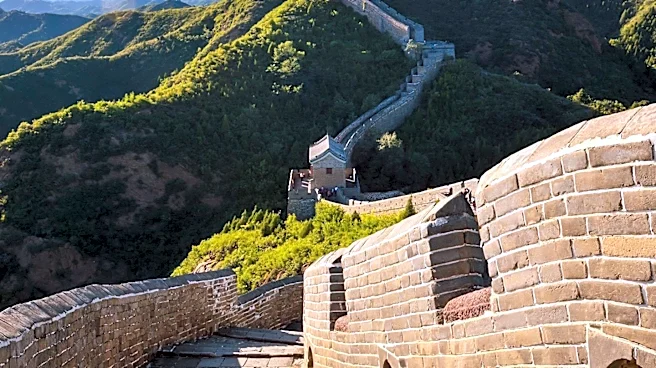

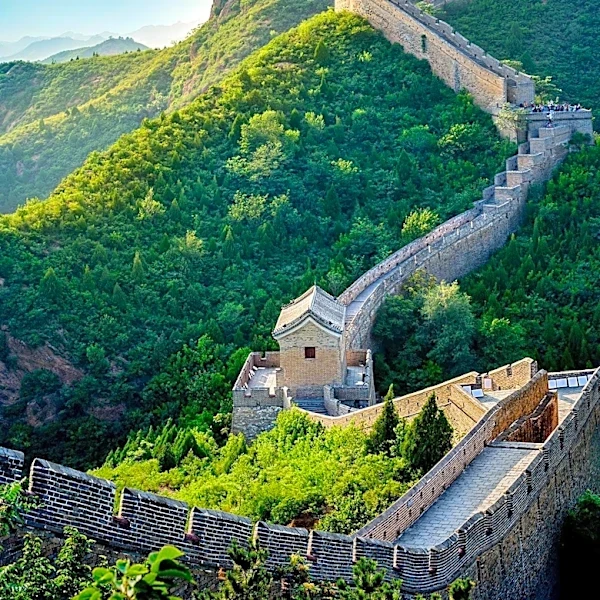






The Great Wall of China, while often perceived as a singular, continuous structure, is in fact a complex series of fortifications built and modified over centuries by various dynasties. Each era brought its own strategic considerations, leading to diverse approaches to frontier defense, ranging from extensive wall construction to reliance on mobile armies and diplomatic engagement. The history of the Great Wall is thus a narrative of evolving military
doctrines, economic realities, and political philosophies that shaped China's relationship with its northern neighbors. From the ambitious, labor-intensive projects of the Qin to the more nuanced policies of the Tang, the wall served as both a physical barrier and a symbol of imperial power and vulnerability.
The Qin's Grand Design and its Aftermath
The Qin dynasty, under its first emperor Qin Shi Huang, initiated the first large-scale consolidation and construction of frontier walls in 221 BC. Following the unification of China, General Meng Tian was tasked with driving out the Xiongnu nomads from the Ordos region and linking existing border walls of Qin, Zhao, and Yan. This effort aimed to clearly define the Qin's northern borders and annex ambiguous territories. The construction was immense, stretching from Gansu to Manchuria, and involved significant human cost, with laborers struggling against harsh terrain and climate. The project was completed around 212 BC, but its demanding nature and the associated suffering contributed to widespread public discontent.
Upon Qin Shi Huang's death in 210 BC, Meng Tian was ordered to commit suicide, and his northern settlements were abandoned. The Xiongnu nomads subsequently moved back into the Ordos Loop as the Qin empire succumbed to rebellion. This early period demonstrated the immense logistical challenges and the potential for such grand projects to destabilize the very empire they were meant to protect. The Qin's approach was characterized by massive physical construction and forced settlement, a strategy that proved unsustainable in the face of internal strife and the resilience of nomadic groups.
Tang Dynasty: A Shift to Mobile Defense and Diplomacy
In stark contrast to the Qin, the Tang dynasty (618–907 AD) largely reversed the wall-building policies of many preceding dynasties. During the reign of Emperor Taizong (626–649 AD), suggestions to repair the aging Great Wall against Göktürk tribesmen were met with skepticism. Taizong famously dismissed the idea, referencing the Sui Emperor Yang's futile efforts to build walls against the Turks, stating, "The Emperor Yang of Sui made the people labor to construct the Great Wall in order to defend against the Turks, but in the end this was of no use." Instead, Taizong advocated for a strategy centered on talented generals and mobile armies.
Rather than relying on static fortifications, the Tang deployed generals like Li Shiji with mobile forces to the frontier. Fortifications were primarily limited to a series of walled garrisons, often euphemistically called "cities for accepting surrender," which served as bases for launching attacks rather than purely defensive structures. This military strategy proved highly effective, allowing the Tang to become one of the largest Chinese empires, destroying the Göktürks of the Eastern Turkic Khaganate and expanding its territory significantly, even reaching modern-day Kazakhstan. While records indicate that General Zhang Yue built a 48-kilometer wall north of Huairong during Emperor Xuanzong's Kaiyuan era (713–742), it's unclear if this was new construction or reinforcement of existing Northern Qi walls. The Great Wall, or its ruins, became a prominent feature in Tang poetry, particularly in "frontier verse," which often depicted desolate landscapes and hinted at the pointlessness of frontier posts, reflecting the Tang's shift away from extensive wall-building as a primary defense.