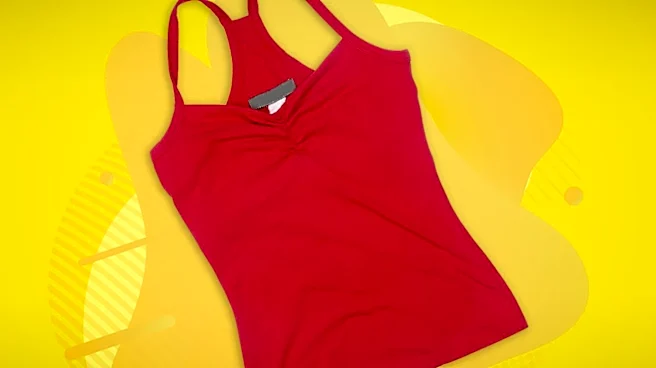






The tank top, a seemingly simple sleeveless shirt, holds a surprisingly rich history and diverse range of uses in American culture and beyond. Named after the tank suits, which were one-piece bathing costumes popular in the 1920s for use in swimming pools, this garment has evolved significantly. Today, it serves as everything from an athletic uniform to a casual everyday item, an undershirt, and even a layering piece, demonstrating its remarkable
adaptability and widespread appeal across various contexts and climates.
Origins and Athletic Roots
Initially, the tank top found its footing in the world of sports. Its sleeveless design made it ideal for athletes, particularly in demanding activities like track and field and triathlon, where freedom of movement and breathability are paramount. The design, often featuring large armholes and neck holes, allowed for unrestricted motion, making it a practical choice for physical exertion. This association with athleticism contributed to its early popularity and established its reputation as a functional garment.
Beyond competitive sports, a specific type of sleeveless T-shirt, often called a muscle shirt, gained significant traction. These shirts, similar in design to a regular T-shirt but without sleeves and sometimes featuring smaller, narrower armholes, became particularly popular in the 1980s. They were commonly linked with surfers and bodybuilders, hence the "muscle" shirt moniker, and frequently displayed the names and logos of gyms. While their athletic utility remains, these shirts are now more often worn as casual wear, even without logos, especially in warmer weather.
The Tank Top as an Undershirt and Casual Wear
One of the traditional roles of the tank top has been that of an undershirt. It has long been worn beneath suits and dress shirts, providing an extra layer of comfort or warmth. This function highlights its versatility, allowing it to transition from a visible outer garment in athletic settings to a discreet foundational piece in more formal attire. The tight-fitting, ribbed cotton version, often referred to as an A-shirt, is particularly common in this capacity.
However, the tank top's utility extends far beyond being just an undershirt. In very warm or humid conditions, it is frequently worn alone as a primary top, offering a lightweight and cool option. This makes it a staple for casual settings, such as lounging at home, performing yard work, or engaging in other household chores. Its simplicity and comfort make it a go-to choice for relaxed environments, solidifying its place as a versatile piece of casual wear for both men and women.
Design Variations and Cultural Terminology
While the basic build of a tank top is straightforward—buttonless, collarless, and pocketless, with reinforced neck and armholes for durability—there are notable variations. Some designs feature particularly low armholes, sometimes referred to as