


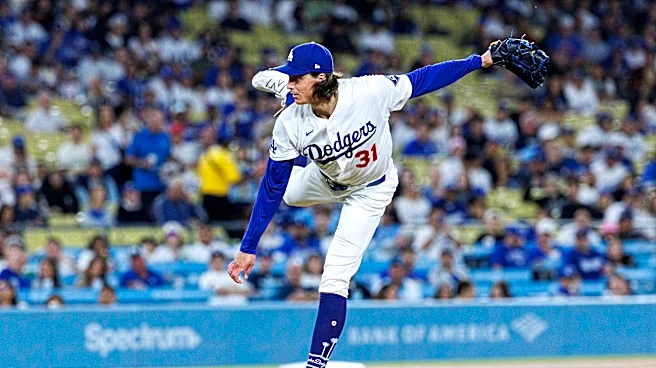
Fernando Valenzuela, affectionately known as "El Toro" (The Bull) by his fans, carved out a remarkable career with the Los Angeles Dodgers, particularly dominating the 1980s. Following his explosive rookie season in 1981, Valenzuela continued to be one of the league's premier pitchers, consistently delivering strong performances and earning multiple accolades. His unique pitching style, characterized by a distinctive wind-up and a devastating screwball,
made him a formidable opponent on the mound. Beyond his statistics, Valenzuela's presence had a profound cultural impact, especially within the Latino community, solidifying his status as a beloved figure in baseball history.
Sustained Excellence in the 1980s
After his historic 1981 season, Fernando Valenzuela maintained a high level of performance, establishing himself as one of the best pitchers in the league. In 1983, he was recognized by coaches and managers as the best-hitting pitcher in the National League, earning his second career Silver Slugger Award. This highlighted his rare dual threat capability, a skill not commonly seen among pitchers. His ability to contribute offensively, even playing occasionally as an outfielder or first baseman in extended games, further endeared him to fans and showcased his all-around athleticism.
One of his most successful seasons came in 1986, where he finished with an impressive 21–11 record and a 3.14 ERA. That year, he narrowly missed winning his second Cy Young Award, finishing second in the voting to Mike Scott of the Houston Astros. Valenzuela also led the National League in wins and the entire MLB in complete games with 20. His consistent excellence during this period solidified his reputation as a durable and dominant force on the mound, capable of carrying his team through long seasons.
All-Star Appearances and Record-Setting Performances
Valenzuela was a perennial All-Star during his prime, making six consecutive appearances in the midsummer classic from 1981 to 1986. In the 1986 All-Star Game, he delivered a memorable performance, tying Carl Hubbell's 1934 record by striking out five consecutive batters. This feat further cemented his place among the game's elite pitchers. His ability to perform under pressure and deliver in high-stakes situations was a hallmark of his career, making him a fan favorite and a respected competitor.
On June 29, 1990, Valenzuela achieved another significant milestone, throwing a no-hitter against the St. Louis Cardinals at Dodger Stadium. This rare accomplishment added to his already impressive resume and demonstrated his continued ability to dominate opposing lineups. Despite a shoulder injury that sidelined him for the Dodgers' victorious 1988 World Series run, Valenzuela's contributions throughout the decade were instrumental to the team's success and his own enduring legacy.
Communication and Later Career
Early in his career, Valenzuela faced communication challenges due to his limited English proficiency. This led to a unique partnership with rookie catcher Mike Scioscia, who learned Spanish to better communicate with Valenzuela on the field. This adaptation not only helped Valenzuela but also contributed to Scioscia becoming a regular starter for the Dodgers. After his tenure with the Dodgers, Valenzuela continued his career with several other teams. He was released by the Dodgers after spring training in 1991 and had an unsuccessful comeback attempt with the California Angels. He signed with the Detroit Tigers in 1992 but never played for them, as his contract was bought by Jalisco of the Mexican League. He later made another comeback attempt with the Baltimore Orioles in 1993 and had a strong season with the San Diego Padres in 1996, posting a 13–8 record with a 3.62 ERA. He retired in 1997 while playing for the St. Louis Cardinals, finishing his career with a 173–153 record and a 3.54 ERA. He declined an offer from the Dodgers for another comeback in 1999 and announced his return to the Liga Mexicana del Pacífico in June 2004 at the age of 44, playing until 2005.