






The Chevrolet Camaro, a name synonymous with American sports car performance, has undergone a remarkable evolution since its introduction in 1966 for the 1967 model year. Initially conceived as a competitor to the Ford Mustang, the Camaro has consistently adapted its design, engineering, and powertrain to meet changing market demands and technological advancements. Across its various generations, from its foundational F-body platform to the more contemporary
Zeta and Alpha architectures, the Camaro has maintained its identity as a two-door, rear-wheel-drive vehicle, offering a choice of 6-cylinder and V8 engines, while continuously pushing the boundaries of performance and style.
The Early Generations: Establishing the Icon
The first-generation Camaro, launched in 1966, utilized a brand-new rear-wheel-drive GM F-body platform, shared with the Pontiac Firebird. It was available as a 2-door, 2+2 seat hardtop and convertible. Engine options ranged from a 230 cubic inch Chevrolet straight-6 to several Chevy V8s. The styling of the 1968 model was very similar to 1967, but with the introduction of Astro Ventilation, side vent windows were deleted, and side marker lights were added as a safety requirement. The SS models received chrome hood inserts, and a 396 cubic inch (6.5 L) big block engine producing 350 hp was added as an option for the SS. The Z/28 also gained prominence, with nearly 7,200 units sold in 1968.
The second-generation Camaro, introduced on February 26, 1970, marked an all-new car. While retaining a similar basic mechanical layout to its predecessor, it became larger and wider with a heavily restyled appearance. This generation, produced through the 1981 model year, featured a unibody structure, a front subframe, A-arm front suspension, and rear leaf springs. Performance and comfort were refined, with significant advances in sound-proofing, ride isolation, and road-holding. Major styling changes occurred in 1974 and 1978. The 1970 model year is often regarded as the most desirable of the early second-generation Camaros due to its performance before the impact of emissions controls and federally mandated bumpers. Notably, a convertible was not offered in this generation.
The Third and Fourth Generations: Modernization and Challenges
The third-generation Camaro, produced from 1981 (for the 1982 model year) until 1992, brought significant modernization. These were the first Camaros to feature modern fuel injection, Turbo-Hydramatic 700R4 four-speed automatic transmissions, five-speed manual transmissions, and 14-, 15- or 16-inch road wheels. They were also nearly 500 pounds lighter than the second-generation model and introduced hatchback bodies. The IROC-Z, a high-performance variant, was introduced in 1985. The convertible body style made a return in 1987 after being absent since 1969. The 1992 models offered a "25th Anniversary Heritage Package" to commemorate the milestone.
The fourth-generation Camaro, debuting in 1993, continued on an updated F-body platform. It maintained the coupe body style with 2+2 seating (with an optional T-top roof) or convertible (reintroduced in 1994), rear-wheel drive, and a choice of pushrod 6-cylinder and V8 engines. The Z28 featured a 350 MPFI (LT1) Small Block V-8 engine, and optional equipment included all-speed traction control and a new six-speed T-56 manual transmission. Anti-lock brakes became standard. In 1998, the Camaro received exterior styling changes and switched to GM's aluminum block LS1 engine, rated at 305 hp, marking the first all-aluminum engine in a Camaro since the 1969 ZL-1. Production of the F-Body platform was discontinued after the 2002 model year due to slowing sales, a deteriorating market for sports coupes, and plant overcapacity.
The Modern Era: Fifth and Sixth Generations
After a hiatus, the Camaro received a complete redesign and new platform for the 2010 model year, marking the fifth generation. Based on concept cars from 2006 and 2007, production began in 2009. This generation drew styling cues from the 1969 Camaro, including the grille, roof styling, quarter windows, and side trim. It was built on the Zeta platform, with Holden in Australia leading the final design, engineering, and development. LS and LT models featured a 3.6 L V6, while the SS models came with a 6.2 L LS3 V8. The 2012 model year marked the 45th anniversary, commemorated with a special edition. The 2012 ZL1 Camaro included a 6.2 L LSA supercharged V8 producing 580 hp.
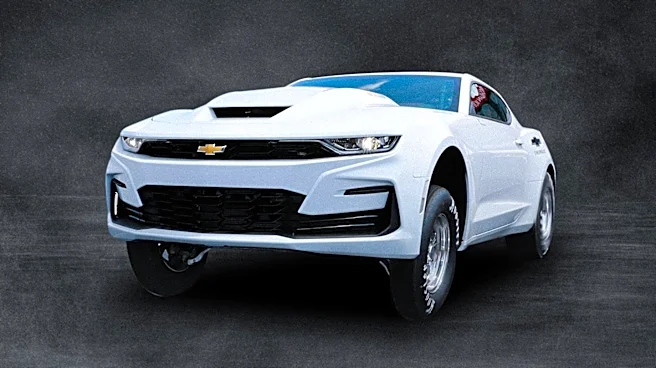
The sixth generation of the Camaro, produced from 2016 to 2024, saw production return to the United States. It is built on the Alpha platform and is shorter, narrower, and lighter than its predecessor. Trim levels at launch included LT and SS, with a base LS trim added for 2017. The 1LE Performance Packages returned, tailored for V6 and V8 models, offering enhanced track capabilities. The SS model is equipped with a 6.2L LT1 V8 producing 455 hp. The ZL1, introduced in 2017, is a high-performance model powered by a 6.2 L LT4 supercharged V8 producing 650 hp, featuring extensive cooling, aerodynamic enhancements, and specialized suspension. A more track-focused ZL1 1LE Extreme Track Performance Package was also introduced, setting impressive lap times at the Nürburgring. The sixth generation continues the Camaro's legacy of combining powerful engines with advanced chassis technology, solidifying its place as a formidable modern sports car.