




Engine braking, a fundamental concept in vehicle deceleration, has evolved differently across various internal combustion engine types. While the core idea remains the same—using the engine's internal resistance to slow a vehicle—the mechanisms employed in gasoline versus diesel engines are distinct, reflecting their inherent operational differences. This evolution highlights how engineers have adapted engine design to provide effective and reliable
braking assistance, reducing reliance on friction brakes and enhancing vehicle control, especially in demanding conditions.
The journey of engine braking showcases a continuous effort to harness the engine's power for deceleration, moving from passive resistance in early gasoline engines to active, engineered solutions for heavy-duty diesel applications. Understanding this progression provides insight into the ingenuity behind modern vehicle safety and performance systems.
Early Gasoline Engine Braking: The Throttle's Role
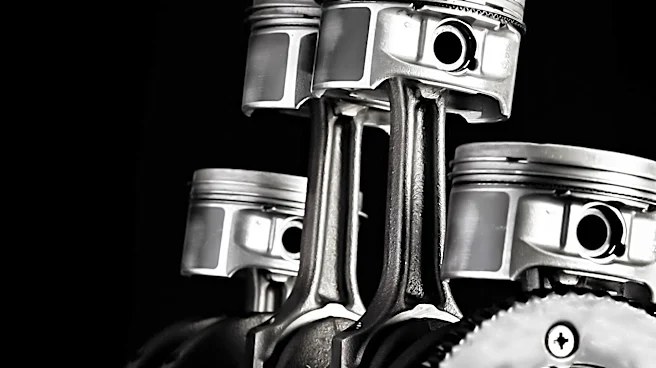
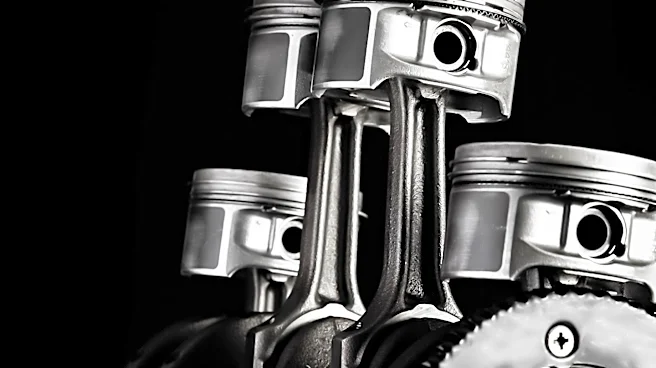
In gasoline engines, the concept of engine braking has long been tied to the throttle mechanism. When the accelerator pedal is released, the throttle valve closes, significantly restricting the flow of air into the engine's cylinders. As the vehicle's momentum continues to turn the engine, the pistons move, attempting to draw air through this constricted opening. This action creates a strong vacuum in the intake manifold.
The engine then expends considerable energy working against this vacuum, effectively converting the vehicle's kinetic energy into heat and resistance. This process slows the vehicle down without the driver needing to constantly apply the friction brakes. Shifting to a lower gear amplifies this effect by increasing the engine's RPM, thereby increasing the frequency and intensity of the vacuum creation. This form of engine braking, while effective, is a passive consequence of the gasoline engine's design, relying on the closed throttle to generate the necessary resistance.
Diesel Engines: The Challenge of Compression
Diesel engines presented a different challenge for engine braking. Unlike gasoline engines, most diesel engines do not have a throttle body to restrict airflow. Instead, air is continuously drawn into the cylinders. When the fuel supply is cut during deceleration, the air compressed in the cylinders would typically act like an "air spring." After reaching maximum compression, this compressed air would return its energy to the piston, pushing it back down and thus providing very little retarding force to the crankshaft.
This inherent characteristic meant that traditional engine braking, as understood in gasoline engines, was largely ineffective in diesel vehicles. The need for a robust deceleration method, especially for heavy trucks operating on steep grades, spurred the development of specialized systems to overcome this limitation. This led to the invention of the compression-release engine brake, a significant innovation in heavy-duty vehicle technology.
The Innovation of Compression-Release Braking: The "Jake Brake"
The breakthrough in diesel engine braking came with the invention of the compression-release engine brake. Clessie Cummins was granted U.S. patent 3,220,392 for this system in 1965. The first company to manufacture these devices was Jacobs Vehicle Systems, which led to the widely recognized term "Jake brake."
This innovative system works by actively opening the exhaust valves in the cylinders very briefly, precisely near the piston's top dead center, just before the compression stroke concludes. This action releases the highly compressed air that would otherwise push the piston back down. By "wastefully" releasing this compressed gas, a significant amount of energy is consumed, effectively slowing the vehicle. The typical compression brake employs a hydraulic system, often using engine oil, to transfer the motion of the fuel injector rocker arm to the exhaust valve(s). This mechanism can generate braking power comparable to the engine's power output, providing substantial assistance in controlling vehicle speed and reducing wear on friction brakes. The ability to select the number of cylinders on which the brake is active, along with integral throttle and clutch switches, allows drivers to fine-tune the braking effect based on driving conditions, marking a significant advancement in vehicle control and safety.